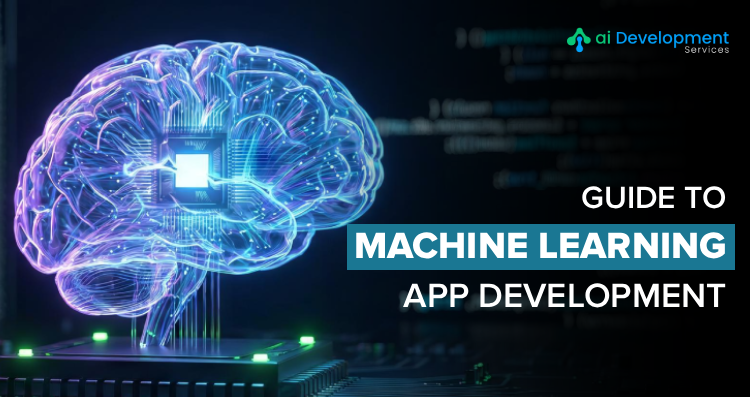
Machine learning is not just a buzzword; it's the backbone driving some of the most innovative applications we use today. From brand recommendations to fraud detection in your banking application, ML is silently doing its magic on how businesses function and users interact with technology. If you are looking to build a machine-learning-powered application, then you are in the right place. We'll walk you through everything you need to know about machine learning application development-from the very basics to deployment.
What Is Machine Learning App Development?
Machine learning app development refers to developing an application that has the capability to learn from data and learn to enhance its own functionality with time. Machine learning apps work differently from traditional applications since they can adapt to different conditions depending on the patterns they identify from data.
To clarify, let me define: AI stands for Artificial Intelligence, which is the overarching idea that computers can be made to simulate human intelligence. Machine learning is the sub-field that applies these processes or operations as it learns from data. Regular app development uses predetermined logic: If this, then that. ML apps deduce the "if this, then that."
A machine learning app development company specializes in building such intelligent apps. They provide handling in data engineering tasks up to the inclusion of machine learning models into intuitive mobile apps.
But why are companies investing in this technology? Simple. They offer personalization, complex decision-making, and identification of information that may not be recognized by a human. Regardless of whether it’s for customer churn prediction, or it’s a supply chain application, it provides a competitive advantage.
How Machine Learning Works in Modern Applications
An understanding of how ML works goes a long way in demystifying the development process. This is not magic, but it is a systematic approach to solving a
Then, there’s data gathering and processing. An ML algorithm’s value is directly linked to the value of its training data. This process also involves gathering the data, purifying it (getting rid of any mistakes), and converting it to a format identified by the algorithm. This process is no different from preparing raw ingredients before cooking.
Finally comes training, validating, and deploying a model. In model training, an ML model identifies patterns in existing data. Validation of a model assesses its ability to accurately predict outcomes in new, unseen data. Once a model is validated, it is placed in an application where it can generate predictions in real time.
However, this does not end here. Continuously learning and optimizing helps to ensure the model remains correct despite changing conditions. The model may drift if it is not updated on new data.
A real-life example: consider developing a spam filter. You would need to collect thousands of emails (data), create a model that identifies spam, test it using new emails, implement it on your email client, and then update it since the spammers will change their methods. This is how a machine learning application is developed.
That's how to develop a machine learning app in a nutshell.
Build Smart Apps with Machine Learning
Key Features of a Machine Learning Application
How does an ML app differ from a conventional app? These are the intelligent attributes embedded within its architecture.
Predictive analytics assists in predicting some trends or others in business. It could be predicting sales volumes. It could be predicting how people behave. Now, you must have wondered how Spotify knows that you're someone with a certain music preference. It is ML.
Natural language processing (NLP) allows apps to comprehend and interact with human language. This is how chatbots, virtual assistants, and sentiment analysis work. The computer vision abilities enable apps to analyze visual data, which may relate to face recognition, image analysis within the medical sector, or quality analysis within manufacturing.
And finally, the strength of Machine Learning is fully realized in real-time decision-making. It could be the instant approval of a loan application or the diversion of delivery vehicles due to road traffic. Machine Learning apps are capable of making the right decision in seconds.
Machine Learning App Examples Across Industries
Machine learning isn't just powering the apps you use for entertainment—it's transforming entire industries and delivering measurable ROI. Here are real-world examples that prove ML apps work, complete with the business impact that matters.
Healthcare: AI That Saves Lives and Millions
PathAI revolutionized cancer diagnosis by using computer vision to analyze pathology slides with 85% fewer diagnostic errors than traditional methods. Hospitals using PathAI reduce turnaround times from days to hours, directly impacting treatment timelines and patient outcomes.
Babylon Health processes over 10 million consultations annually using ML-powered symptom checkers and triage systems. Their app reduced unnecessary ER visits by 27%, saving healthcare systems millions while making medical advice accessible 24/7.
FinTech: Protecting Money and Predicting Markets
PayPal processes 4+ billion transactions annually with ML fraud detection that flags suspicious activity in under 100 milliseconds. Their system catches fraud patterns humans would miss, saving the company over $2 billion annually in prevented losses.
Wealthfront manages $27+ billion in assets using robo-advisors powered by ML. Their algorithms automatically rebalance portfolios, harvest tax losses, and adjust risk levels—democratizing wealth management for users who can't afford traditional advisors charging 1-2% annually.
E-commerce: Personalization That Converts
Amazon's recommendation engine generates 35% of total company revenue—that's over $150 billion annually driven by ML. Their system analyzes 152 million customers' browsing patterns, purchase history, and even how long you hover over products to predict what you'll buy next.
Stitch Fix combines ML with human stylists to personalize clothing selections for 4+ million customers. Their algorithms predict style preferences, size accuracy, and return likelihood, reducing returns by 25% (a massive cost savings in fashion retail where returns typically hit 30-40%).
Top Industries Using Machine Learning App Development Services
Machine learning isn't optional anymore—it's how leading companies stay competitive. Here's where machine learning app development services are delivering the biggest ROI.
1. Healthcare: AI-Driven Diagnosis & Patient Care
Why They Adopted ML: Healthcare generates 30% of the world's data but uses only 3%. ML turns this into life-saving insights.
Key Applications: Predictive diagnostics, patient risk assessment, drug discovery, personalized treatment plans
ROI: 30-40% reduction in diagnostic errors, $150B potential annual savings in US healthcare, 50% faster drug discovery
Market Size: $11.2B in 2023 → $187.95B by 2030 (37.5% CAGR)
2. FinTech: Fraud Detection & Smart Investing
Why They Adopted ML: Financial institutions process billions of transactions daily—manual monitoring is impossible.
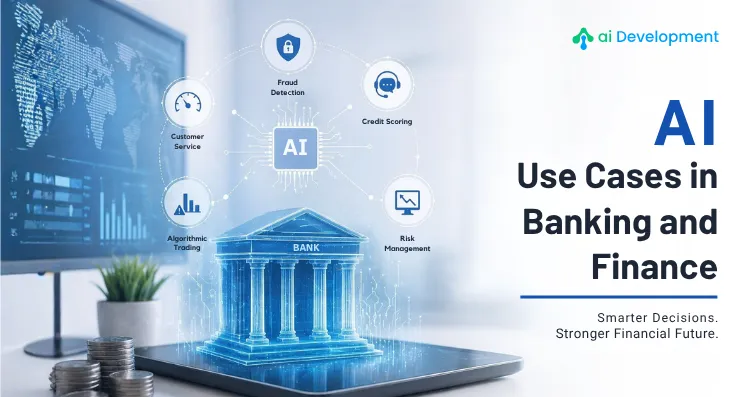
Key Applications: Real-time fraud detection, algorithmic trading, credit risk assessment, robo-advisors, regulatory compliance automation
ROI: $2B+ saved annually in fraud prevention (PayPal), 75% more loan approvals with lower defaults (Upstart), 60% reduction in false positives for fraud alerts
Market Size: Banking AI market projected to reach $64.03B by 2030 (32.6% CAGR)
3. Retail & E-commerce: Personalization at Scale
Why They Adopted ML: Customers expect Netflix-level personalization everywhere they shop.
Key Applications: Recommendation engines, dynamic pricing, inventory optimization, demand forecasting, visual search
ROI: 35% of Amazon's revenue from ML recommendations ($150B+), 25% reduction in returns (Stitch Fix), 30% decrease in overstock waste (Walmart)
Market Size: Retail AI market to hit $31.18B by 2028 (34.9% CAGR)
4. Manufacturing: Predictive Maintenance & Quality Control
Why They Adopted ML: Unplanned downtime costs manufacturers $50B annually. ML predicts failures before they happen.
Key Applications: Predictive maintenance, quality inspection via computer vision, supply chain optimization, production forecasting
ROI: 25-30% reduction in maintenance costs, 70% decrease in equipment breakdowns, 20% improvement in production efficiency
Market Size: Manufacturing AI market to reach $68.36B by 2032 (57.2% CAGR)
5. Logistics & Transportation: Route Optimization & Fleet Management
Why They Adopted ML: Fuel and labor costs eat 60-70% of logistics budgets. ML cuts both dramatically.
Key Applications: Dynamic route optimization, demand forecasting, autonomous vehicles, warehouse automation, delivery time prediction
ROI: 10M gallons fuel saved annually (UPS), 15-20% reduction in delivery costs, 25% fewer vehicle breakdowns through predictive maintenance
Market Size: Logistics AI market projected at $16.4B by 2030 (43.5% CAGR)
6. Financial Services: Risk Assessment & Compliance
Why They Adopted ML: Regulatory fines cost banks $10B+ annually. ML automates compliance and catches violations.
Key Applications: Anti-money laundering (AML), KYC verification, credit scoring, market risk analysis, regulatory reporting
ROI: 50% reduction in compliance costs, 90% faster KYC processing, 40% improvement in fraud detection accuracy
Market Size: Fintech AI market to reach $61.3B by 2031 (28.6% CAGR)
7. Agriculture: Precision Farming & Crop Optimization
Why They Adopted ML: Global population hitting 10B by 2050 requires 70% more food production—ML makes farms smarter.
Key Applications: Crop health monitoring, yield prediction, pest detection, automated irrigation, soil analysis
ROI: 5-15% yield increases, 90% reduction in herbicide use (Blue River Technology), 20-40% water savings, 30% reduction in crop losses
Market Size: Agriculture AI market to reach $11.13B by 2032 (24.8% CAGR)
8. Energy & Utilities: Grid Optimization & Predictive Analytics
Why They Adopted ML: Energy grids lose 8-15% of power to inefficiencies. ML optimizes distribution in real-time.
Key Applications: Smart grid management, energy consumption forecasting, predictive equipment maintenance, renewable energy optimization
ROI: 10-15% reduction in energy waste, 20-30% lower maintenance costs, 25% improvement in renewable energy efficiency
Market Size: Energy AI market projected at $7.78B by 2030 (22.4% CAGR)
How to Develop a Machine Learning App: Step-by-Step Process
Building an ML app isn't a linear process, but following a structured approach helps ensure success.
1. Requirement analysis and use-case definition: Start by clearly defining the problem you're solving. What business outcome do you want? Who will use the app? What data do you have access to?
2. Data strategy and model selection: Identify data sources, decide how you'll collect and store data, and choose the right ML algorithm for your use case. Classification? Regression? Clustering? The problem dictates the model.
3. Model training and testing: Train your model on historical data, test its accuracy, and fine-tune it until it performs reliably.
4. App development and ML integration: Build the application interface and backend, then integrate your trained ML model so it can make predictions or decisions within the app.
5. Deployment, monitoring, and scaling: Launch the app, monitor model performance continuously, and scale infrastructure as usage grows. Regular retraining keeps the model accurate.
This is essentially how to develop a machine learning app from concept to production.
Technology Stack for Machine Learning App Development
The right tooling makes all the difference. Here's what's typically used in ML app development.
- Programming languages: Python leads ML development due to its simplicity and rich ecosystem. Java, R, and JavaScript may also play roles, depending on the project.
- ML frameworks: TensorFlow, PyTorch, and Scikit-learn represent go-to frameworks for model building and training. Each has its strengths depending on whether one is performing deep learning, traditional ML, or rapid prototyping.
- Cloud platforms such as AWS, Azure, and Google Cloud Platform: massive scalable infrastructure, out-of-the-box support for ML services, and tools to deploy and manage models.
- Databases: You'll need databases for storing the training data. MLOps: You will require a set of tools like MLflow or Kubeflow to manage version control for models, track experiments, and have automated deployment pipelines.
Data Privacy, Security & Compliance in Machine Learning Apps
- Data encryption and access controls ensure that sensitive data is protected both in transmissions and when stored. Sensitive data should only be accessible by authorized system users or computers.
- GDPR, HIPAA, and industry compliance are important considerations according to your industry and location. Healthcare-related apps need to comply with HIPAA regulations. GDPR needs to be taken into consideration if your application interacts with EU citizens' information. Failure to comply with regulations could spell legal troubles for your business.
- Ethical AI and bias prevention ensure that your model is non-discriminatory. If biased data goes into the model, biased outputs are the result. This could both harm users and harm your reputation.
- Secure model deployment practices prevent unauthorized access to your models. Model theft is a real risk, especially for competitive advantages built on proprietary ML.Where there is a large amount of data, there is a great responsibility to apply security and compliance best practices.
Also Read: The Top AI Development Companies List In Dubai To Watch In 2025
Challenges in Machine Learning App Development & How to Overcome Them
ML application development faces some challenges. These are the common ones and how to deal with them.
- Data quality issues are the biggest pain points. Garbage in, garbage out. Invest in high-quality data processing pipelines. Sometimes it helps to hire domain experts to label the data.
- Issues of accuracy in machine learning come up because machine learning models fail to generalize. How do accuracy issues get resolved, though? They can be solved through better feature engineering, additional data, or using different machine learning algorithms.
- Scalability issues will be faced when your app gains popularity. We should be able to design infrastructure in such a way that it is ready to scale when it is first developed. We should utilize cloud-based infrastructure that is capable of auto-scaling.
- High development costs can be managed by starting small with an MVP (Minimum Viable Product), concentrating on the most valuable functionalities first, and employing skilled developers who prevent high-priced mistakes; high development expenses can be effectively tackled.
Why Choose AI Development Service as Your Machine Learning App Development Company?
Selecting the appropriate partner is critical to the success of your machine learning project. I will explain why AI Development Service is the best partner in machine learning app development. We have end-to-end machine learning app development services, right from consulting and data planning to training and developing the app and deploying and maintaining it. We provide one team to work on the whole project, ensuring seamless integration and quicker results.
Our team includes skilled ML engineers and data scientists who have developed solutions in various industries. Whether it is a startup validating their hypotheses or an enterprise looking to scale, we work with you to provide solutions that fit your requirements. We focus on secure, scalable, and ROI-focused development. Your data will always be secure, your application will scale with your business, and each function serves a purpose of meeting business needs.
And we don't disappear after delivering your application. Our services ensure that your application continues to function effectively while your business is evolving.
Let's Discuss Your Machine Learning Vision
Conclusion
Machine learning app development is no longer futuristic—it's happening now, and businesses that embrace it are pulling ahead. From personalized customer experiences to operational efficiencies that save millions, ML-powered apps deliver real, measurable value. Whether you're looking to automate processes, gain deeper insights from data, or create entirely new product experiences, now is the right time to invest in ML.
Ready to build your machine learning application? Hire AI Development Service for custom machine learning app development that's secure, scalable, and designed to grow with your business. Let's turn your vision into intelligent reality.
FAQs on Machine Learning App Development
How long does it take to build a machine learning app?
It depends on complexity. A simple MVP might take 3-6 months, while enterprise-grade solutions can take 9-12 months or longer.
What industries benefit most from ML apps?
Healthcare, finance, e-commerce, education, and logistics see the most dramatic improvements, but virtually any data-driven industry can benefit.
How do I choose a machine learning app development company?
Look for proven experience, technical expertise in ML frameworks, strong portfolios, transparent communication, and post-launch support.
Is machine learning app development secure?
When done right, yes. Proper encryption, access controls, compliance with regulations, and ethical AI practices ensure security.