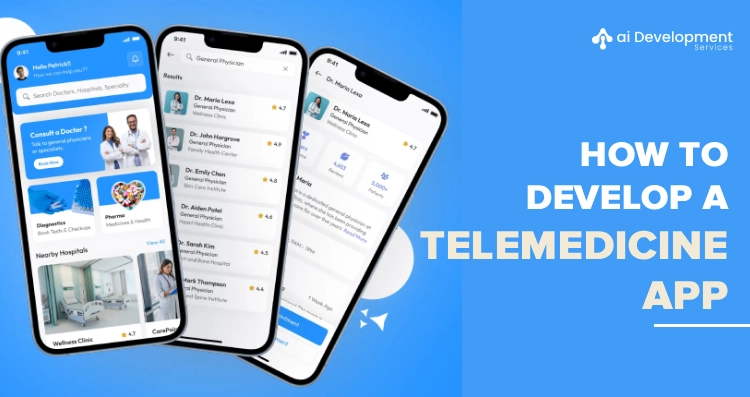
The healthcare industry is experiencing a digital revolution, with telemedicine leading the charge in making quality healthcare accessible to everyone, anywhere. This transformation has fundamentally changed how patients connect with healthcare providers, breaking down geographical barriers and bringing medical expertise directly to people's homes through their smartphones and computers.
The surge in telemedicine adoption reflects a profound shift in patient expectations and healthcare delivery models. Modern patients demand convenience, immediacy, and personalized care that fits seamlessly into their busy lives. Virtual care solutions have proven they can deliver exceptional medical services while reducing costs, improving access, and enhancing patient satisfaction across all demographics and medical specialties.
With AI in telemedicine revolutionizing diagnostics, treatment planning, and patient engagement, there has never been a better time to invest in telemedicine app development. Artificial intelligence is transforming virtual consultations from simple video calls into sophisticated diagnostic platforms capable of analyzing symptoms, predicting health risks, and personalizing treatment recommendations. However, creating a successful telemedicine app requires careful planning, robust technology, and strict compliance with healthcare regulations. This comprehensive guide will walk you through everything you need to know about developing a telemedicine app that delivers exceptional patient care while ensuring business success.
Understanding the Telemedicine App Landscape
The Market Opportunity
The telemedicine market presents extraordinary opportunities for healthcare innovators and entrepreneurs. Grand View Research reports that North America held 33.36% of the global market share in 2024, with real-time telemedicine accounting for 38.23% of total revenue. This dominance is driven by advanced healthcare infrastructure, high smartphone penetration, and increasing acceptance of digital health solutions.
The integration of artificial intelligence is creating even more explosive growth opportunities. The AI in telehealth market was valued at $3.89 billion in 2024 and is expected to skyrocket to $86.31 billion by 2034, representing an impressive 36.35% CAGR. This growth is fueled by AI's ability to enhance diagnostics, personalize treatment plans, and automate routine healthcare tasks.
Several factors are driving this unprecedented growth:
- Convenience and accessibility for patients in remote or underserved areas
- Cost-effectiveness compared to traditional in-person visits
- Chronic disease management requiring continuous monitoring
- Growing elderly population needing regular medical supervision
- Healthcare workforce shortages necessitating efficiency improvements
- Insurance coverage expansion for telehealth services
Types of Telemedicine Apps You Can Build
When partnering with a telemedicine app development company, you'll need to decide which type of application best serves your target market:
1. Primary Care & Virtual Consultations
These apps facilitate general medical consultations, allowing patients to connect with primary care physicians for diagnosis, treatment advice, and prescription management. They're ideal for non-emergency health concerns like cold, flu, minor infections, and routine check-ups.
2. Chronic Disease Management
Specialized apps for managing ongoing conditions like diabetes, COPD, hypertension, and cardiovascular diseases. These platforms integrate AI healthcare software development to continuously monitor patient vitals, predict complications, and adjust treatment plans in real-time.
3. Mental Health & Telepsychiatry
According to Mordor Intelligence, telepsychiatry is experiencing explosive growth at a 28.2% CAGR through 2030, with behavioral health accounting for 57% of all outpatient telemedicine visits. This segment includes therapy sessions, psychiatric consultations, addiction treatment, and crisis intervention services.
4. Specialty Consultations
Apps focused on specific medical specialties like teleradiology (remote image interpretation), teledermatology (skin condition diagnosis), telecardiology (heart health monitoring), and telestroke (emergency stroke treatment).
Essential Features for Your Telemedicine App
When working with telemedicine app development services, ensuring your app includes these critical features will determine its success in the competitive healthcare marketplace.
Core Functionality
1. User Profiles & Authentication Secure patient and provider profiles with robust authentication mechanisms. Both patients and healthcare providers need comprehensive profiles containing relevant information:
- For patients: Medical history, allergies, current medications, insurance information
- For doctors: Credentials, specializations, availability, license verification
- HIPAA-compliant access control with role-based permissions
- Multi-factor authentication (MFA) for enhanced security
2. Real-Time Video Consultation The heart of any telemedicine application is high-quality, low-latency video communication. Implement WebRTC (Web Real-Time Communication) technology to ensure:
- Crystal-clear HD video quality
- Minimal latency even on slower connections
- Screen sharing capabilities for reviewing test results
- Recording functionality (with patient consent) for medical records
- Backup audio-only calling when video isn't available
3. Appointment Scheduling, an intelligent booking system that:
- Displays real-time doctor availability
- Sends automated appointment reminders via SMS, email, and push notifications
- Allows rescheduling and cancellations with proper notice
- Syncs with provider calendars (Google Calendar, Outlook)
- Implements waiting room functionality for virtual visits
- Supports recurring appointments for chronic disease management
4. Electronic Health Records (EHR) Integration Seamless access to patient medical history is crucial for accurate diagnosis and treatment. Your telemedicine app should integrate with major EHR systems like Epic, Cerner, and Allscripts to:
- Retrieve complete patient medical history
- View previous test results and imaging
- Access medication lists and allergy information
- Update records automatically after consultations
- Ensure data synchronization across healthcare providers
5. E-Prescriptions & Medication Tracker Digital prescribing capabilities that:
- Generate electronic prescriptions sent directly to pharmacies
- Include drug interaction checking and allergy alerts
- Support controlled substance prescriptions (with EPCS certification)
- Send medication reminders to patients
- Track prescription refills and adherence
- Provide medication information and side effects
6. In-App Chat & Messaging Secure, HIPAA-compliant peer-to-peer communication allowing:
- Text-based consultation for non-urgent questions
- File and image sharing (lab results, photos of symptoms)
- Group chat for care coordination among healthcare teams
- Automated chatbot responses for common questions
- Message encryption and secure storage
7. Payment Gateway Integration Multiple secure payment options to accommodate different preferences:
- Credit/debit card processing via Stripe or Square
- Digital wallets (PayPal, Apple Pay, Google Pay)
- Insurance integration for direct billing
- Subscription management for recurring payments
- Transparent pricing and billing statements
- Support for HSA/FSA payments
Let's Transform Your App Idea Into Reality
The Development Process: A Step-by-Step Guide
Developing a telemedicine app requires a systematic approach. Here's how professional telemedicine app development services structure the entire process:
Phase 1: Discovery & Planning (2-3 weeks)
The foundation of successful telemedicine app development begins with thorough research and planning:
Market Research & Analysis
- Analyze competitors and identify market gaps
- Study user behavior and preferences in your target market
- Evaluate emerging trends in telehealth and digital health
- Assess potential barriers to adoption
- Identify opportunities for differentiation
Define Target Audience & User Personas
- Patient demographics (age, location, health conditions)
- Healthcare provider specialties and practice settings
- Administrator and support staff requirements
- Technical proficiency levels of each user group
Feature Prioritization & MVP Scope
- List all desired features and functionality
- Categorize as "must-have," "nice-to-have," and "future enhancements"
- Define minimum viable product (MVP) scope
- Create user stories and use cases
- Establish success metrics and KPIs
Technology Stack Selection Choose appropriate technologies based on scalability, security, and performance requirements (detailed in the next section).
HIPAA Compliance Planning
- Conduct security risk assessment
- Design HIPAA-compliant architecture
- Establish data encryption protocols
- Define access control mechanisms
- Plan audit logging and monitoring systems
Cost Estimation & Project Timeline
- Develop detailed project budget including all phases
- Create realistic timeline with milestones
- Allocate resources (developers, designers, QA testers)
- Plan for contingencies and buffer time
- Define payment schedules and deliverables
Phase 2: Design & User Experience (3-4 weeks)
User experience can make or break a telemedicine app. This phase focuses on creating intuitive, accessible interfaces:
Wireframing & Prototyping Create wireframes and interactive prototypes for three distinct user panels:
Patient Panel Features:
- User-friendly onboarding and profile creation
- Simple doctor search with filters (specialty, availability, ratings)
- One-click appointment booking
- Easy access to medical records and test results
- Intuitive video consultation interface
- Clear medication tracking and reminders
- Transparent billing and payment history
Doctor Panel Features:
- Comprehensive dashboard with daily schedule overview
- Patient queue management for virtual waiting rooms
- Quick access to patient medical history and records
- Efficient prescription writing and e-prescribing
- Consultation notes and voice dictation
- Revenue and performance analytics
- Communication tools for patient follow-up
Admin Panel Features:
- User management (patients, doctors, staff)
- Platform analytics and reporting dashboards
- Compliance monitoring and audit trails
- Payment and billing oversight
- Content management for educational resources
- System configuration and customization tools
- Customer support ticket management
UI/UX Design Principles:
- Accessibility compliance (WCAG guidelines)
- Clean, professional healthcare-appropriate aesthetics
- Intuitive navigation requiring minimal learning curve
- Consistent design language across all screens
- Mobile-first responsive design
- Support for dark mode to reduce eye strain
- Large touch targets for elderly users
Phase 3: Development (8-12 weeks)
This is where your telemedicine vision becomes reality. A professional app development company will implement the following technology stack:
Backend Development
- Node.js with Express or Nest.js for scalable, real-time applications
- PHP/Laravel for robust, secure server-side logic
- Python/Django for AI/ML integration capabilities
- RESTful APIs or GraphQL for efficient data exchange
- Microservices architecture for independent scaling
- Load balancing and auto-scaling configuration
Frontend Development
- React Native for cross-platform mobile apps (iOS & Android)
- React.js or Vue.js for responsive web interfaces
- Angular for enterprise-level applications
- Progressive Web App (PWA) capabilities
- Offline functionality for areas with poor connectivity
- Performance optimization for fast loading times
Database Selection
- PostgreSQL for relational data with HIPAA compliance
- MongoDB for flexible, scalable NoSQL storage
- Redis for caching and session management
- Amazon RDS or Google Cloud SQL for managed database services
- Automated backup and disaster recovery systems
- Data encryption at rest and in transit
Cloud Infrastructure
- Amazon Web Services (AWS) with HIPAA-eligible services
- Google Cloud Platform with healthcare compliance
- Microsoft Azure for enterprise healthcare solutions
- Containerization with Docker and Kubernetes
- Content Delivery Network (CDN) for global performance
- DDoS protection and firewall configuration
AI/ML Integration Leverage specialized AI development services to implement:
- TensorFlow or PyTorch for deep learning models
- OpenAI GPT for conversational AI and chatbots
- IBM Watson Health for clinical decision support
- Google Cloud Healthcare API for FHIR data management
- Custom machine learning models for diagnostics
- Continuous learning and model improvement systems
Development Milestones:
- Week 1-2: Backend API development and database setup
- Week 3-4: User authentication and profile management
- Week 5-6: Video consultation integration
- Week 7-8: EHR integration and appointment scheduling
- Week 9-10: Payment gateway and prescription management
- Week 11-12: AI features and final integration testing
Phase 4: Testing & Quality Assurance (2-3 weeks)
Rigorous testing ensures your telemedicine app is reliable, secure, and compliant:
Functional Testing
- Test all features across user panels (patient, doctor, admin)
- Verify appointment booking and cancellation workflows
- Test video call quality under various network conditions
- Validate e-prescription generation and pharmacy integration
- Confirm payment processing accuracy
- Test push notifications and email delivery
Security & Compliance Testing
- Penetration testing to identify vulnerabilities
- HIPAA compliance verification audit
- Data encryption validation
- Authentication and authorization testing
- Privacy controls and consent management
- Audit log functionality verification
Performance & Load Testing
- Stress testing with simultaneous users
- Video call quality under high server load
- Database query optimization
- API response time benchmarking
- Mobile app battery consumption testing
- Network latency simulation
User Acceptance Testing (UAT)
- Beta testing with real patients and healthcare providers
- Usability testing with target demographics
- Accessibility testing for users with disabilities
- Gather feedback and make necessary adjustments
- Conduct pilot programs with select healthcare facilities
Cross-Platform Testing
- iOS devices (iPhone, iPad) across multiple versions
- Android devices from various manufacturers
- Different screen sizes and resolutions
- Web browsers (Chrome, Safari, Firefox, Edge)
- Desktop and tablet interfaces
Phase 5: Deployment & Launch (1-2 weeks)
The final phase brings your telemedicine app to users:
App Store Submission
- Prepare app store listings with compelling descriptions
- Create promotional screenshots and demo videos
- Submit to Apple App Store (iOS) with health app documentation
- Submit to Google Play Store (Android) with privacy policy
- Address any review feedback or compliance issues
- Plan phased rollout or immediate full launch
Server Deployment
- Configure production servers with HIPAA compliance
- Set up monitoring and alerting systems
- Implement automated backup procedures
- Configure Content Delivery Network (CDN)
- Establish disaster recovery protocols
- Set up analytics and crash reporting tools
Staff Training & Documentation
- Create user manuals for patients and healthcare providers
- Develop admin documentation for system management
- Conduct training sessions for healthcare staff
- Prepare video tutorials and FAQ resources
- Establish customer support procedures
- Create troubleshooting guides
Marketing & User Onboarding
- Launch marketing campaigns targeting patients and doctors
- Create onboarding tutorials within the app
- Offer promotional pricing or free trial periods
- Partner with healthcare organizations for adoption
- Implement referral programs for user growth
- Monitor user feedback and reviews closely
Also Read: AI-Powered Therapy App Development Services for Mental Wellness in Dubai
Artificial intelligence is transforming telemedicine from simple video consultations into comprehensive, intelligent healthcare platforms. Partnering with specialized AI app development services can significantly enhance your app's capabilities:
Intelligent Triage Systems
AI-powered triage assesses patient symptoms and routes them to the appropriate care level:
- Symptom Checkers: Interactive questionnaires that gather patient information
- Severity Assessment: Algorithms determine urgency (emergency, urgent, routine)
- Provider Matching: Connect patients with specialists based on symptoms
- Resource Optimization: Reduce unnecessary emergency visits
- Cost Savings: Direct patients to the most appropriate care setting
Example: A patient reporting chest pain is immediately flagged for emergency care, while someone with a minor rash is scheduled for a routine dermatology consultation.
Diagnostic Assistance
AI in telemedicine enables sophisticated diagnostic capabilities:
Medical Image Analysis:
- Radiology: Detection of fractures, tumors, and abnormalities in X-rays, CT, and MRI scans
- Dermatology: Skin cancer detection from smartphone photos with accuracy comparable to dermatologists
- Ophthalmology: Diabetic retinopathy screening from retinal images
- Pathology: Cell analysis for cancer detection
- Cardiology: ECG interpretation and arrhythmia detection
Real-World Impact: AI diagnostic tools can reduce diagnostic errors by up to 85% in certain conditions and provide instant preliminary analysis that healthcare providers can review and confirm.
Predictive Healthcare
Machine learning models analyze vast amounts of patient data to:
- Disease Progression Prediction: Forecast how chronic diseases will develop
- Readmission Risk: Identify patients likely to be readmitted after hospital discharge
- Treatment Response: Predict which treatments will be most effective
- Complication Prevention: Alert providers to early warning signs
- Population Health Management: Identify at-risk patient groups for proactive intervention
Business Value: Predictive analytics can reduce hospital readmissions by 20-30%, significantly improving patient outcomes while reducing healthcare costs.
Virtual Health Assistants
24/7 AI-powered chatbots provide:
Patient Support:
- Appointment scheduling and reminders
- Medication adherence support
- Symptom monitoring and health tips
- Navigation assistance for using the app
- Frequently asked questions answered instantly
Provider Support:
- Clinical decision support with evidence-based recommendations
- Drug interaction warnings and allergy alerts
- Automated documentation and note-taking
- Coding and billing assistance
- Literature search and research assistance
Efficiency Gains: Virtual assistants can handle 60-80% of routine inquiries, freeing healthcare providers to focus on complex cases requiring human judgment.
Natural Language Processing (NLP)
Natural Language Processing represents one of the most transformative applications of NLP development in modern telemedicine, fundamentally changing how medical information is captured, analyzed, and utilized across healthcare workflows. Advanced NLP development enables real-time conversion of doctor-patient conversations into structured clinical notes, automatically generating comprehensive SOAP notes that include Subjective symptoms, Objective findings, Assessment, and Plan sections. These sophisticated systems support complex medical terminology and abbreviations while providing multi-speaker identification in conversations and maintaining HIPAA-compliant speech recognition protocols.
Information extraction capabilities powered by cutting-edge NLP development allow healthcare systems to extract key medical concepts from unstructured clinical notes, identify medications with their precise dosages and treatment plans from free-text documentation, and capture crucial social determinants of health from patient conversations. Modern NLP development also incorporates sentiment analysis to understand patient emotional states and offers multilingual support for diverse patient populations, ensuring equitable access to quality healthcare documentation regardless of language barriers.
Personalized Treatment Plans
AI healthcare software development enables truly personalized medicine:
- Analyze patient genetics, lifestyle, and medical history
- Recommend tailored treatment protocols
- Adjust medication dosages based on real-time monitoring
- Suggest lifestyle modifications specific to patient needs
- Consider patient preferences and adherence patterns
- Integrate evidence-based medicine with individual patient data
Future Potential: As Adaptive AI models become more sophisticated, telemedicine apps will offer precision medicine recommendations previously only available at specialized research institutions.
Cost Breakdown & Development Timeline
Understanding the investment required is crucial for planning your telemedicine project. Costs vary significantly based on complexity, features, and the telemedicine app development company you choose.
Estimated Development Costs
Basic Telemedicine App (MVP): $50,000 - $80,000
Includes:
- User registration and profiles
- Basic appointment scheduling
- Video consultation (WebRTC)
- Simple chat messaging
- Basic payment integration
- iOS and Android apps
- HIPAA compliance basics
- 3-6 months development time
Best For: Startups testing market viability, small clinics, or specific specialty practices
Mid-Level App with AI Features: $80,000 - $150,000
Includes:
- EHR system integration
- E-prescription capabilities
- AI symptom checker
- Advanced appointment management
- Multiple payment options
- Patient health tracking dashboard
- Analytics and reporting
- Admin panel
- Enhanced security features
- 6-9 months development time
Best For: Growing healthcare practices, multi-specialty clinics, or regional healthcare networks
Enterprise-Level Platform: $150,000 - $300,000+
Includes:
- Advanced AI diagnostics
- Predictive analytics
- Multi-language support
- Custom EHR development
- IoT device integration (wearables, medical devices)
- Comprehensive admin controls
- White-label capabilities
- Advanced analytics and BI tools
- Telehealth marketplace features
- HIPAA-compliant data warehouse
- 24/7 support and monitoring
- 9-12+ months development time
Best For: Large hospital systems, insurance companies, national telemedicine platforms
Ready to Build Your Telemedicine App?
Monetization Strategies for Telemedicine Apps
A well-designed telemedicine app can generate revenue through multiple channels. Consider these proven monetization models:
1. Subscription Model
Patient Subscriptions:
- Monthly plans: $10-$50/month for unlimited consultations or discounted visit rates
- Annual plans: $100-$500/year with significant savings vs. monthly
- Family plans: $30-$100/month covering multiple family members
- Tiered pricing: Basic (limited visits), Premium (unlimited), Enterprise (for employers)
Provider Subscriptions:
- Monthly fees: $50-$500/month based on features and patient volume
- Per-provider pricing: For group practices with multiple physicians
- Platform access fees: For healthcare systems to provide their own services
- White-label licensing: $1,000-$10,000/month for branded solutions
Advantages: Predictable recurring revenue, higher customer lifetime value, increased user commitment
Example: Teladoc offers subscription plans starting at $0/month with per-visit fees, or premium plans with included visits.
2. Pay-Per-Visit Model
Transaction-Based Pricing:
- Commission model: 15-30% of consultation fee
- Flat fee per visit: $5-$15 per consultation
- Hybrid approach: Lower commission with monthly subscription
- Sliding scale: Percentage decreases as volume increases
Advantages: Low barrier to entry, attractive to occasional users, scales with usage
Example: Doctor on Demand charges $79 per visit for urgent care, with insurance often covering the cost.
3. Freemium Model
Free Basic Features:
- Limited consultations per month
- Text-only chat with delayed responses
- Basic symptom checker
- Health information and articles
Premium Features (Paid):
- Unlimited video consultations
- Priority scheduling
- AI-powered diagnostics
- Specialist consultations
- Prescription delivery
- Health tracking and personalized insights
Advantages: Large user base for upselling, low customer acquisition cost, network effects
Conversion Strategy: Aim for 2-5% of free users converting to paid plans with compelling premium features.
4. B2B Licensing & White-Label Solutions
Enterprise Sales:
- Hospital systems: $50,000-$500,000+ annually for platform access
- Insurance companies: License the platform for member benefits
- Employers: Offer as employee health benefit
- Pharmacy chains: Integrate with retail health services
- Medical device manufacturers: Bundle with connected devices
- Advantages: Large contract values, stable long-term relationships, lower marketing costs
5. Advertisement Revenue
Carefully Integrated Health Ads:
- Pharmaceutical companies promoting medications
- Health and wellness product recommendations
- Medical equipment manufacturers
- Health insurance offerings
- Fitness and nutrition services
Critical Considerations:
- Must comply with healthcare advertising regulations
- Avoid compromising user experience with excessive ads
- Ensure ads don't influence medical recommendations
- Maintain HIPAA compliance with ad targeting
- Clearly distinguish ads from medical content
Revenue Potential: $0.50-$5.00 per user per month, but can alienate users if not done tastefully
6. Insurance Integration & Direct Billing
Reimbursement Model:
- CPT code billing: Submit claims directly to insurance companies
- Credentialing: Get providers credentialed with major payers
- Contracted rates: Negotiate fee schedules with insurers
Conclusion: Transform Healthcare with Telemedicine
The telemedicine revolution is not coming—it's already here, reshaping how millions of people access healthcare worldwide.
However, success in telemedicine requires more than just good intentions and basic video chat functionality. Today's competitive landscape demands sophisticated platforms that seamlessly blend clinical excellence with technological innovation. This means incorporating AI in telemedicine for intelligent diagnostics and personalized care, implementing robust security measures to protect sensitive patient data, and ensuring strict compliance with HIPAA and other healthcare regulations from day one.
Ready to transform healthcare delivery and build a telemedicine solution that improves lives while generating sustainable revenue?
Partner with experienced AI healthcare software development experts and proven telemedicine app development services providers who understand both the technical complexities and regulatory requirements of healthcare technology. Your journey to creating innovative, compliant, and profitable telemedicine solutions begins with a single decision: to start now.
The future of healthcare is digital, personalized, and accessible. Be part of building that future.
Frequently Asked Questions (FAQ)
1. How long does it take to develop a telemedicine app?
Development timelines vary based on complexity. A basic MVP takes 3-4 months, including discovery, design, development, testing, and deployment. A mid-level app with AI features requires 6-9 months, while enterprise-level platforms take 9-12+ months.
Key factors affecting timeline include platform selection (iOS, Android, web), third-party integrations (EHR, payment systems), AI implementation complexity, and HIPAA compliance requirements. Working with an experienced development company using agile methodologies helps optimize development speed while maintaining quality and security standards.
2. What are the essential compliance requirements for telemedicine apps?
HIPAA compliance is mandatory for any telemedicine app handling patient health information. This includes end-to-end encryption, secure authentication, comprehensive audit logging, and Business Associate Agreements with all vendors.
Additional requirements include HL7 standards for data interoperability, FDA regulations if your app diagnoses or treats medical conditions, GDPR for European users, and EPCS certification for prescribing controlled substances. State-specific telehealth laws also apply, including provider licensing and prescribing regulations. Professional telemedicine app development services ensure compliance from day one.
3. How much does it cost to develop a telemedicine app with AI features?
Costs range based on complexity:
Basic MVP: $50,000-$80,000 (core features, no AI)
Mid-level with AI: $80,000-$150,000 (includes AI symptom checker, basic diagnostics)
Enterprise platform: $150,000-$300,000+ (advanced AI diagnostics, predictive analytics, IoT integration)
AI in telemedicine adds $20,000-$100,000+ depending on sophistication. Factor in ongoing costs of 15-20% annually for maintenance, hosting, updates, and compliance. Partner with specialized AI development services for optimal results.
4. Why should I integrate AI into my telemedicine app?
AI in telemedicine provides significant competitive advantages and improves patient outcomes. AI-powered symptom checkers enable 24/7 triage, reducing unnecessary emergency visits. Diagnostic assistance helps detect diseases earlier through image analysis. Predictive analytics identifies at-risk patients for proactive intervention.
According to Towards Healthcare, the AI in telehealth market will grow from $3.89 billion in 2024 to $86.31 billion by 2034, representing a 36.35% CAGR. Early adopters of AI healthcare software development gain market leadership, improve efficiency by 50-70%, and deliver superior patient experiences that drive adoption and retention.