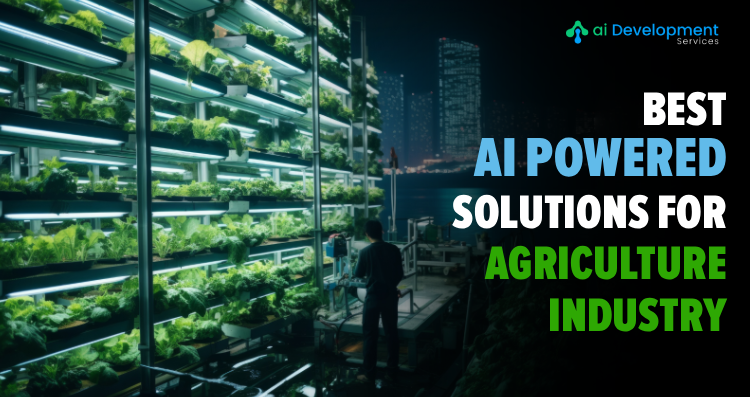
The agricultural landscape in 2026 has witnessed a remarkable transformation, moving from traditional farming challenges to embracing sophisticated AI-powered solutions that are reshaping how we grow, manage, and distribute food. While farmers once relied solely on experience and seasonal patterns, today's agricultural operations are increasingly powered by artificial intelligence that can predict crop yields, detect diseases before they spread, and optimize resource usage with unprecedented precision.
This revolution in technology has not occurred in a vacuum. Behind every successful smart farm are dedicated AI development firms acting as a bridge between the latest and greatest technology and business needs on the farm. They know agriculture requires deep domain expertise, understanding of biology, and solutions that work in very unpredictable outdoor environments.
In the detailed guide that follows, we will look into some specific AI solutions provided by three leading companies making AI in farming accessible and profitable for agricultural businesses of all sizes. If your business is a large commercial farm or an agribusiness looking to leverage machine learning in agriculture for competitive advantage, understanding what these specialized AI development partners offer may be the key to your success with digital transformation.
The Need for Specialized AI Development Partners in Agriculture
Generic AI solutions that work perfectly in controlled environments often fail when deployed in agricultural contexts. AI in agriculture demands unique considerations that general-purpose technology companies don't understand. Agricultural environments present extreme temperature variations, unpredictable weather, poor connectivity in rural areas, and biological systems that behave differently from mechanical processes.
Implementation thus calls for expertise in the domain of agri-tech. An AI development company specializing in agriculture brings together agronomists, data scientists, and engineers who understand farming science and machine learning algorithms. They know that systems for detecting crop diseases take into account variable lighting, soil sensors must withstand harsh conditions for many years, and interfaces must be simple to operate by farmers managing tasks in the fields.
Farmers should seek a partner in AI development that has proven farm implementations, with multidisciplinary teams combining farming knowledge and technical capabilities; suppliers who can customize for your farm rather than sell one-size-fits-all solutions, and ongoing support that understands seasonal agricultural cycles.
The cost-benefit balance overwhelmingly speaks to cooperation with specialized companies. Building an internal AI team would involve hiring data scientists and machine learning engineers along with agricultural experts, which may cost the company in the range of $500,000 to $2 million annually. Specialized AI development companies are able to deliver proven systems in months, not years, accelerating time-to-value and reducing financial risk with lower technical complexity.
Top AI Development Companies for the Agricultural Industry
The agricultural AI landscape includes numerous technology providers, but finding companies that combine deep agricultural knowledge with advanced AI capabilities separates true innovators from general software vendors. The following three companies have distinguished themselves through specialized focus on agricultural challenges, proven track records of successful implementations, and comprehensive solution portfolios addressing the full spectrum of farming needs.
Company #1: AI Development Service
Overview
AI Development Service has established itself as a preferred partner for agricultural organizations looking to revolutionize through uniquely crafted AI solutions. Their specialty in AI solutions for agriculture implies they have agriculture-specific realities in mind while developing all products and platforms.
The key competencies possessed by the company are the ability to develop customized models for predictive capabilities specific to crops, computer vision systems adapted for agricultural settings, IoT integration capabilities strong enough to handle connectivity issues, mobile-first design capabilities suitable for fieldworkers, and strategic alliances with agricultural universities so that their models are based on current agricultural practices.
AI Development Service will cater to mid-scale farms with a size of 100-1000 acres, large farms requiring commercial solutions, farm cooperatives working together for common AI technology, and agri-business firms including seed companies and equipment manufacturers.
Key AI Solutions for Agriculture
Precision Crop Health Monitoring System
Precision crop health monitoring Solution: This flagship service offered by AI Development Service tackles one of the most expensive challenges in agriculture, which is the detection of crop stress, diseases, and pests before they result in substantial crop losses. This entails the combination of data gleaned from multispectral imagery obtained via drones, satellite imagery, field sensors, and past crop performance data. These models, which have been learned from millions of crop photos, can detect stresses two weeks prior to human observation.
Practical applications yield outstanding results. For example, a California almond rancher was able to identify a fungal infection in time to treat it successfully, preserving 85% of the crop yield in the infected area—a savings of $180,000. Accuracy ensured a 60% decrease in pesticide usage over the cost of preventive spraying. Their customers see a 15-25% decrease in crop protection expenses with a 10-20% increase in yield.
AI-Powered Irrigation Optimization Platform
Water scarcity affects agriculture on an international scale. The irrigation optimizing platform developed by AI Development Service changes the way water is managed in irrigations from timing to intelligent water management. The platform combines various factors, including soil water content measured at various levels, weather conditions, stages of crop development, and the topography of the land.
The system integrates perfectly well with all the leading irrigation controller models, making it impossible to replace the system entirely. Farmers get the chance to use a simple mobile application that shows the current status and AI suggestions. The system adapts and improves results through data from each and every season. User experience involves meeting everyday needs through notifications and water savings analysis.
Yield Prediction and Harvest Planning System
Planning harvest logistics becomes dramatically more efficient with accurate yield predictions. AI Development Service's system combines multiple data streams to forecast production volumes, typically within 5% of actual yields by mid-season. The innovation lies in adaptive AI learning—continuously incorporating current season data including growing degree days, weather patterns, crop health indicators, and observed growth rates.
Integration with harvest logistics planning helps optimize crew scheduling, storage preparation, and transportation. For growers with contracts, earlier visibility enables better negotiations. Implementation begins with historical data integration, and by mid-season, predictions reach sufficient accuracy for harvest preparation decisions.
Technology Stack & Approach
AI Development Service builds solutions on robust frameworks utilizing TensorFlow and PyTorch for model development. Cloud processing through AWS and Azure provides scalable computing power, while edge computing enables real-time processing on farm equipment without constant connectivity.
Data handling reflects farmers' concerns about proprietary information. All client data remains encrypted. Farmers retain complete ownership with clear contracts specifying information cannot be sold or shared without permission. Customization capabilities begin with deep discovery of each client's specific challenges, existing infrastructure, and desired outcomes.
Need Custom AI Solutions for Your Agricultural Business?
Company#2: Suffescom Solutions
Overview
Suffescom Solutions has vast expertise in the development of AI and has been successful in the delivery of complex artificial intelligence projects in various sectors and brings this expertise to the agriculture domain too. The agricultural technology sectors Suffescom has expertise in include predictive analytics, computer vision, automation systems, and market intelligence platforms.
Geographic presence is spread across North America, Europe, expanding capabilities within Asia-Pacific, and Latin America. Customers range from progressive farmers, agricultural co-ops, equipment manufacturers integrating AI solutions into farm equipment, to food processing companies requiring tracing done across supply chains.
Flagship AI Solutions for Agriculture
Intelligent Crop Management Platform
Suffescom Solutions provides an intelligent crop management solution for the challenges farm owners must, on a daily basis, face and resolve. When it comes to today’s farming processes, it is necessary to account for dozens of factors such as climate, prices, and more.
The system excels through holistic analysis. When disease pressure increases, the platform evaluates disease risk for specific fields, considers weather forecasts affecting treatment efficacy, suggests optimal application timing, calculates expected ROI, and integrates recommendations with equipment scheduling.
Technology integration connects with IoT sensors monitoring soil moisture, temperature, and nutrients. It ingests satellite data providing weekly crop health assessments and interfaces with farm equipment for variable-rate technology. The mobile app prioritizes urgent decisions, presents recommendations in plain language, and allows approving suggestions with minimal interaction.
Predictive Analytics and Resource Optimization Suite
The predictive analytics toolkit provided by Suffescom Solutions helps to turn uncertainties into manageable risks in the following areas: yield expectation, disease and pest pressure, input requirement, and market prices. The predictive analytics utilize both farm-level data and geographically relevant data to determine the link between various farm practices and their effects.
Weather and climate adaptation solutions support the farmer in coping with growing variability. The system identifies trends in temperature patterns and precipitation, suggests crop variety adjustments, recommends planting date modifications, and calculates how management practices should evolve as climate shifts.
Cost optimization benefits extend across all input categories. By analyzing marginal returns, the system identifies where additional spending increases yields profitably and where current levels already achieve maximum response. Clients report 10-18% reduction in input costs while maintaining or improving yields.
Agricultural Automation and Intelligence Platform
Labor availability represents an existential challenge for many farms. Suffescom Solutions' automation platform addresses this through systems reducing labor requirements while improving consistency. The platform enables semi-autonomous systems, including autonomous tractors for tillage and planting, robotic systems for greenhouse operations, and automated quality sorting using computer vision.
Supply chain and market intelligence features track market prices across channels, analyze buyer demand patterns, and coordinate logistics ensuring products reach markets at peak freshness. Scalability ensures the platform serves diverse operations, from small farms with entry-level subscriptions to large enterprises with comprehensive solutions and multi-farm management.
Implementation & Support
Suffescom Solutions' onboarding begins with a comprehensive needs assessment, understanding current operations, pain points, and team capabilities. Training programs include hands-on sessions for operators, technical training for IT staff, and strategic training for managers. The training emphasizes learning by doing—users work with their own farm data during sessions.
Ongoing support reflects agricultural realities. During planting and harvest, support response times accelerate. The company schedules major updates during slower winter periods. Agronomist support teams help interpret AI recommendations, building farmer's confidence in trusting the technology.
Company #3: RisingMax Inc.
Overview
RisingMax Inc. has established itself as an innovative force in agricultural AI through a focus on emerging technologies. Their agricultural solutions portfolio emphasizes next-generation capabilities, including generative AI applications creating synthetic training data for rare crop diseases, adaptive AI systems that continuously learn from changing environmental conditions, and blockchain in agriculture for transparent supply chain tracking and verified sustainable practices.
Industries served extend beyond traditional farming to vertical farming operations, aquaculture facilities, controlled environment agriculture including greenhouses, and agricultural research institutions developing next-generation farming methods.
Core AI Agricultural Solutions
Precision Agriculture Intelligence System
RisingMax Inc.'s precision agriculture intelligence system combines multiple data streams and advanced AI to enable the optimization of every agricultural input. The system treats each field as a collection of management zones with distinct characteristics requiring customized approaches.
Precision agriculture applications leverage high-resolution data from drones equipped with multispectral and thermal cameras, soil sensors distributed throughout fields, weather stations providing hyperlocal data, and historical yield maps. Resource optimization features address water, fertilizer, and pesticide management. Variable-rate irrigation typically reduces water usage by 25-35% while improving yield uniformity.
Environmental sustainability impact extends to comprehensive environmental stewardship. The system calculates the carbon footprint of operations and suggests emission-reducing practices. It identifies opportunities for wildlife habitat corridors and water quality protection features preventing over-application near sensitive areas.
Comprehensive Farm Analytics and Monitoring Solution
RisingMax Inc.'s farm analytics solution brings AI capabilities to livestock operations. Livestock management capabilities center on wearable sensors tracking location, activity levels, feeding duration, and vital signs. AI algorithms identify subtle changes indicating illness days before visible symptoms, enabling prompt treatment, improving recovery rates from approximately 60% to over 90%.
Disease detection systems track transmission patterns during outbreaks, helping contain spread. Vaccination scheduling optimizes timing based on disease risk factors. For crop operations, yield prediction integrates current conditions, crop development, historical patterns, and weather forecasts. By harvest, predictions typically achieve 95% accuracy, enabling precise planning.
Advanced Agricultural Monitoring Platform
RisingMax Inc.'s advanced monitoring platform excels at data integration and intelligent analysis. Drone and satellite imagery analysis capabilities process aerial data automatically. Computer vision algorithms identify crop health variations, weed pressure, irrigation malfunctions, and pest damage. The system generates annotated maps highlighting areas requiring attention.
Soil health management tools integrate data from distributed sensors, satellite-based measurements, and historical patterns to create comprehensive soil health maps revealing nutrient deficiencies, compaction issues, pH variations, and organic matter distribution. Farm management platform integration ensures AI insights connect seamlessly with existing workflows and agricultural equipment.
Technology Innovation
RisingMax Inc. carves out a niche for itself by aggressively leveraging the latest developments in technology. The company's algorithms keep pace with the latest research developments in machine learning, adopting methodologies and techniques right after they are developed in the research community.
Connectivity challenges are overcome using edge computing and real-time processing, catering specifically to the needs of agriculture, ensuring it stays connected and functional, no matter what the connectivity situation is.
A mobile-first approach is based on the understanding that farmers, rather than office workers, spend more time outdoors, in fields rather than offices. All interfaces, according to the mobile-first principle of RisingMax, are set up, taking into consideration essential information available prominently even on mobile screens, ease of interaction requiring as few taps as possible, as well as supporting offline modes.
How is AI Used in Agriculture?
Artificial intelligence is being deployed across every stage of agricultural production, transforming traditional farming into data-driven, precision operations. Here's how AI technology is actively working on farms today:
Real-Time Crop Monitoring
AI analyzes satellite and drone imagery to monitor crop health across thousands of acres in minutes. Computer vision algorithms detect nutrient deficiencies, water stress, and disease outbreaks up to 10 days before they're visible to the human eye, enabling early intervention that prevents yield losses.
Smart Decision-Making
Machine-learning models process data from weather stations, soil sensors, historical yields, and market prices to provide actionable recommendations. Farmers receive precise guidance on optimal planting times, irrigation schedules, fertilizer application rates, and harvest timing—decisions that directly impact profitability.
Autonomous Operations
Self-driving tractors, robotic harvesters, and automated spray drones operate 24/7 with GPS precision accurate to within 2.5 centimeters. These AI-powered machines reduce labor requirements by 30-40% while increasing operational efficiency and consistency.
Predictive Analytics
AI forecasts crop yields with ±2% accuracy weeks before harvest, predicts disease outbreaks before they spread, and analyzes market trends to recommend optimal selling times. This predictive capability transforms reactive farming into proactive farm management.
Resource Optimization
AI-controlled irrigation systems reduce water usage by 20-30% by delivering precisely the right amount of water based on soil moisture, weather forecasts, and crop development stage. Variable rate technology applies fertilizers and pesticides only where needed, cutting chemical use by up to 60% while improving effectiveness.
Instant Problem Diagnosis
Farmers photograph plant leaves with smartphones, and AI instantly diagnoses diseases with 95%+ accuracy, providing treatment recommendations in seconds. Over 10 million farmers globally use these mobile AI diagnostic tools, bringing expert agronomic knowledge to even the most remote operations.
AI doesn't replace farmers—it augments their expertise with data-driven insights, automation, and predictive capabilities that were impossible just a few years ago. The result is higher yields, lower costs, reduced environmental impact, and more sustainable food production for a growing global population.
The Future of AI in Agriculture Through These Innovations
The three companies profiled aren't just providing solutions to today's challenges—they're actively shaping how agriculture will evolve. How is AI used in agriculture continues to evolve from simple automation to sophisticated decision-making systems that could eventually manage entire farming operations with minimal human intervention.
The current emerging trends include swarm robotics, which can provide the ability to work together in swarms with small robots, and quantum computing, which has the potential to solve optimization problems that today are unsolvable. The inclusion of the latest technology such as advanced satellite systems, 6G technology, and synthetic biology paired with AI presents opportunities already unforeseen.
Future farming will involve sustainability and adaptability as the key aims. The AI systems used in farming will not only be optimized for higher crop production, carbon sequestration, biodiversity, water conservation, and soil health, but also for climate adaptation, anticipating and planning for farm operations around expected climate changes decades into the future.
Implementation Guide: Getting Started with AI Solutions
Those farming operations that have shown willingness to integrate with AI technology should start with a proper evaluation of their current issues. There should be identification of issues that technology like AI can solve in their operations. Those issues could range from labor costs, underperforming production, wastage of resources, or missed markets.
Evaluation of farm preparedness can only happen when there is an honest examination of the factors of infrastructure, data, and team competency. Budgeting needs to incorporate the cost and benefits, including the tangible expenses of software and hardware, and the intangible benefits of increased yields and quality, which arise from the adoption of agricultural technology and AI solutions and systems. For most agriculture-related investments in AI, the return on investment can occur within the first 2-3 years.
Techniques to mitigate the risks of uncertainty allow for mitigation of risks. Begin with pilot programs on small landmasses and with contractable partners with flexible agreements during non-risky seasons. Changing the way of management requires the knowledge that the successful implementation of technology relies on acceptance by users. Engage agricultural employees in the decision-making process for solutions and emphasize the benefits of AI-enhanced efficiency.
Conclusion
AI development companies are turning agriculture from an industry that has been resistant to change into a technology-forward sector. Innovation is key to survival. The three companies profiled here-AI Development Service, Suffescom Solutions, and RisingMax Inc.-are perfect examples of specialized AI partners delivering solutions to meet the unique challenge of agriculture and making highly advanced technology accessible even to the smallest-scale farms.
Undoubtedly, it has been proved that specialized partners play a highly critical role in the digital transformation into agriculture. Generic technology companies lack domain expertise for agricultural success. Specialized AI development firms combine farming knowledge with technical capabilities. Such partnerships accelerate adoption, reduce risk, and deliver proven solutions refined through multiple implementations.
Machine learning in agriculture has gone from an experimental curiosity to a practical necessity. Farms with AI attain superior performances over competitors on productivity, profitability, and sustainability metrics quite systematically. As climate variability worsens and labor goes scarcer, the capabilities of AI go from competitive advantages to operational requirements.
Partner with AI Experts Who Understand Agriculture
From precision farming to autonomous equipment, we develop AI solutions that transform agricultural operations.
FAQs
How do I choose between these AI development companies for my agricultural business?
Choose a partner based on your primary needs. If crop monitoring is the focus, a company specializing in crop health analytics may be ideal. For end-to-end farm management, a platform-based provider like Suffescom is a better fit. Tech-forward farms may prefer companies focused on emerging AI tools. Always request demos using your own data, review training and support, and check references from similar farms.
What is the typical implementation timeline for agricultural AI solutions?
Timelines depend on solution complexity. Simple tools can be deployed in 2–4 weeks, mid-level systems in 2–4 months, and enterprise platforms in 4–8 months. Most providers recommend implementation during off-season periods, with optimal results typically seen after one or two full growing cycles.
Can these companies customize solutions for specific crops or farming methods?
Yes. These companies offer crop- and method-specific customization. Solutions can be tailored for different crops, regions, and farming models, such as organic, vertical, or controlled environments. Customization level affects both cost and deployment time.
What data infrastructure is needed to work with these AI development companies?
Basic requirements include stable internet and mobile devices. Advanced solutions may use GPS-enabled equipment, sensors, and weather data systems. While historical data helps improve accuracy, AI systems can start with current-season data and scale over time using cloud-based infrastructure.
How do these companies handle data security and farmer privacy?
They use strong security measures such as encryption, access controls, and regular audits. Farmers retain full ownership of their data, which cannot be shared without consent. Many providers also offer data portability and on-premise deployment options for added privacy.