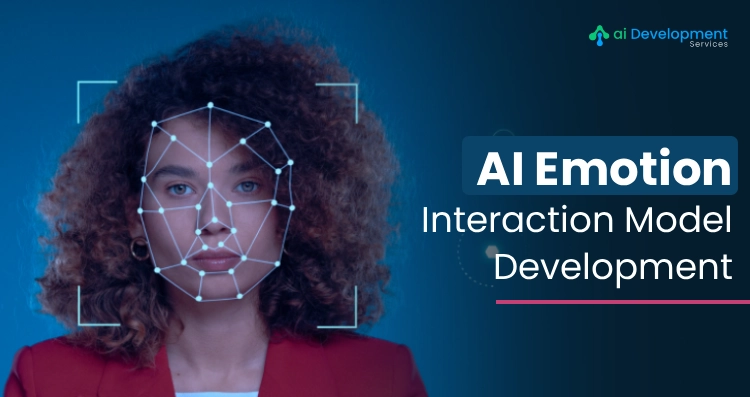
Emotional intelligence powered by AI is becoming a mainstream of enterprises, changing the way businesses will understand user behavior, streamline customer experience, and develop anthropocentric products. The Emotion AI market and/or affective computing market all over the world is expanding at a disastrous pace. The recent industry insights released in 2024 - 2025 suggest that the market exceeding $85 billion by 2030 is due to the field of use in healthcare, education, automotive, customer service, entertainment, and HR analytics.
The tendencies in new markets are oriented at new multimodal emotional cognitions as systems assessing voice, text, micro-expressions of faces, biometrical signatures, and context all concurrently. To make digital interactions more personalized, increase customer satisfaction, and deploy solutions that react quickly to human emotions, companies now invest in the Development of AI Emotion Interaction Model.
The other huge trend is that of a rapid limitless uptake of Generative AI Development Company which incorporate emotion modelling in chat AI, virtual assistants, therapy bots, and metaverse-ready avatars. Business models are also changing concurrently enabling businesses to monetize emotion analytics by:
- SaaS subscription platforms
- API-based emotion detection engines
- Customized enterprise AI solutions
- Emotion analytics for consumer apps
- Data-driven sentiment dashboards for operational teams
Due to the increasing focus on emotionally conscious technology by industries, most of them have been collaborating with particular companies that offer AI Emotion Model Development Services and Adaptive AI Development to ensure that they stay afloat.
Understanding about AI Emotion Analytics Platform.
An AI Emotion Analytics Platform refers to a computer program which identifies, processes and decodes human emotions based on multiple input sources. It applies machine and deep learning as well as multimodal data processing to learn about emotional states and generate valuable analytics.
Core Concept & Purpose
The main aim of an AI emotion platform is to break down human perceptions and patterns of behavior with a high level of accuracy.
By blending cognitive computing with affective modeling, it allows businesses to:
- Understand customer satisfaction and engagement
- Improve digital product interaction
- Boost sales and support outcomes
- Personalize experiences based on emotional cues
- Track stress, sentiment, mood shifts, and cognitive load
Organizations increasingly build emotion recognition system capabilities to integrate emotional intelligence into their existing digital products.
Ready to Develop an AI Emotion Analytics Platform?
How Emotion Recognition Technology Works
Emotion recognition technology works by analyzing multiple types of user input to determine emotional states. The platform processes various signals using advanced AI techniques:
1. Voice Analysis
AI examines tone, pitch, speed, pauses, tremors, and vocal biomarkers to detect emotions like anger, joy, frustration, stress, or calmness.
2. Facial Expression Recognition
Deep learning models detect micro-expressions using computer vision. Neural networks interpret subtle facial movements across:
- Eyebrows
- Mouth structure
- Eye activity
- Muscle contractions
This helps identify emotions such as happiness, sadness, disgust, fear, and surprise.
3. Text & Language Sentiment
Natural Language Processing (NLP) models examine:
- Word sentiment
- Emotional intensity
- Contextual tone
- Behavioral intention
This is crucial for chatbots, feedback systems, and social interactions.
4. Physiological and Behavioral Cues
Advanced emotion AI integrates biometric inputs such as pulse detection, eye-tracking, gesture analysis, and body language tracking. Together, these inputs enable multimodal emotional intelligence.
Key Components Behind Emotion Analytics Systems
Building a high-accuracy emotion intelligence platform requires multiple components working in synergy.
1. High-Quality Training Datasets
- Facial emotion datasets
- Speech emotion datasets
- Text sentiment corpora
- Real-world multimodal emotion datasets
2. AI Algorithms & Models
- Deep neural networks (CNN, RNN, LSTM)
- Multimodal fusion models
- Transformer-based language models
- Computer vision pipelines
3. Training Workflows
- Data preprocessing
- Feature extraction
- Model training & testing
- Validation & optimization
- Bias detection and reduction
4. Real-Time Processing Engine
Ensures instant emotion detection and immediate feedback loops.
5. Secure Data Pipelines
- Handles storage, anonymization, security, and regulatory compliance.
- Organizations often hire specialists for AI Emotion Interaction Model Development to ensure precise recognition and scalable deployment.
Essential Features for a Modern Emotion Analytics Platform
An AI Emotion Analytics Platform of the next generation should offer multimodal intelligence, real-time interpretation as well as deep contextual analysis. In the case of modern enterprises, they seek platforms that are not only able to identify emotions, but also read, interpret, and suggest behavioral patterns in a variety of settings. Below is a comprehensive, expanded breakdown of the most essential features every advanced emotion analytics system should include.
1. Multimodal Emotion Detection Engine
Emotion analytics is most accurate when a platform evaluates multiple signals simultaneously. A modern system should integrate:
- Facial expression analysis using CNN-based computer vision
- Voice emotion detection through speech biomarkers (tone, pitch, pace, cadence)
- Text sentiment and contextual understanding using NLP transformers
- Biometric cues such as heart-rate proxies, gaze patterns, or gesture tracking
This multimodal fusion empowers the platform to deliver a 360-degree view of a user’s emotional state. By analyzing data from multiple sources, the system minimizes bias and improves accuracy—critical for enterprise deployments in healthcare, education, and customer service.
2. Real-Time Emotion Monitoring Dashboard
A modern platform must offer a highly responsive, intuitive dashboard that visualizes emotional states as they occur. This dashboard should include:
- Live emotional state feeds
- Dynamic graphs showing emotional shifts
- Heatmaps of user engagement levels
- Conversation-based sentiment logs
- Behavior change patterns over time
Real-time visualization enables teams—such as support agents, therapists, instructors, and sales teams—to adjust their approach instantly based on user emotions.
3. Context-Aware Emotional Interpretation
Emotion alone lacks meaning without context. Advanced platforms incorporate contextual intelligence to understand why an emotion appears.
This feature includes:
- Identifying triggering events
- Understanding situational tone and sentiment
- Mapping emotional patterns to user actions
- Detecting silent or underlying emotions (e.g., suppressed frustration)
For example, a user who says “I’m fine” textually may sound tense or appear worried visually. Context-aware modeling captures such mismatch and produces a more accurate emotional insight.
4. Sentiment & Behavioral Trend Analysis
Beyond detecting momentary emotions, businesses require longitudinal emotional analysis. A modern emotion analytics platform should generate:
- Weekly, monthly, and quarterly sentiment trends
- User-specific mood graphs
- Engagement-to-emotion correlation metrics
- Emotional fluctuation patterns
- Predictive trend curves
This helps enterprises understand long-term customer satisfaction, productivity levels, therapy progress, or employee well-being.
5. Emotion Score & Intensity Measurement
Modern systems evaluate the intensity of emotions, not just the type. This includes:
- Numeric scoring of emotional strength (e.g., joy = 0.85)
- Stress and tension levels
- Cognitive load detection
- Emotion volatility indicators
Emotion intensity helps industries such as telemedicine or education personalize interventions with precision.
6. Predictive Emotion Modeling
Predictive intelligence is a hallmark of next-generation emotion analytics. By leveraging deep learning and sequential models, the platform can:
- Forecast emotional outcomes
- Identify risks (burnout, dissatisfaction, churn)
- Predict user reactions to events or conversations
- Suggest intervention strategies
This feature is crucial in customer experience management, mental health, HR analytics, and user lifecycle prediction.
7. Actionable Insights & Automated Recommendations
The platform should translate complex emotional data into clear action points such as:
- User is stressed; slow down the chatbot response pace.
- Customer shows rising frustration; suggest escalation to live support.
- Employee displays repeated disengagement; recommend HR intervention.
- AI-generated recommendations allow teams to make informed decisions in real time.
8. Multi-Language & Cross-Cultural Emotion Support
Global businesses need emotion AI that works across languages, accents, and cultural variations. Key capabilities include:
- Emotion recognition across multiple languages
- Cultural expression variation mapping
- Neutralizing linguistic bias
- Adaptation to localized communication patterns
This ensures inclusivity and accuracy across diaspora populations.
9. API-First Architecture for Seamless Integration
Modern platforms must integrate effortlessly with existing enterprise systems. An ideal setup should offer:
- RESTful and GraphQL APIs
- SDKs for major programming languages
- Connectors for CRM, ERP, HRMS, helpdesk systems, and mobile apps
- Webhook-based triggers
- API-first design ensures high scalability and smooth incorporation into digital ecosystems.
10. Secure Data Handling & Compliance Controls
Emotion data is sensitive. Compliance-oriented features ensure trust and safety:
- Role-based access control (RBAC)
- AES-256 encryption
- GDPR, HIPAA, and SOC2 alignment
- Biometric data anonymization
- Secure cloud storage
- Model transparency reporting
These capabilities are essential for healthcare, HR, and customer environments that require stringent data governance.
11. Customizable AI Emotion Models
Not every business has the same emotional triggers or user base. Advanced systems allow:
- Training domain-specific emotion models
- Fine-tuning models for industry requirements
- Custom emotion categories (e.g., "customer churn risk," "sales readiness")
- Adaptive model updates based on new data
This aligns with the increasing demand for AI Emotion Model Development Services that deliver customized insights.
12. Automated Reporting & Insight Summaries
The platform should periodically generate detailed reports such as:
- Emotional performance summaries
- Customer interaction quality reports
- User behavior evolution charts
- Conversation sentiment breakdown
- Team evaluation reports
Automated reporting reduces manual analysis effort and improves decision-making efficiency.
13. Offline & Low-Latency Emotion Processing
To support industries like automotive and VR/AR systems, the platform must offer:
- Edge-based inference
- Local device processing for low-latency
- Offline emotion recognition where internet access is limited
This is increasingly essential for real-time applications such as driving safety, rehabilitation training, and gaming.
14. Emotion-Based Personalization Engine
Modern UIs adapt based on user emotion. A personalization engine may:
- Change app tone based on mood
- Adjust recommendations
- Alter chatbot response style
- Optimize user journeys
Emotion-led personalization boosts engagement, retention, and user satisfaction.
15. Scalability & Adaptive Intelligence
The platform must continuously learn from user interactions and grow stronger over time.
Capabilities include:
- Continuous model retraining
- Self-improving algorithms
- Adaptive AI Development for evolving behavior patterns
- Scalable cloud architecture
This ensures the emotion system remains relevant and accurate as user data changes.
Build a High-Accuracy Emotion AI System Today
Development Process & Timeline Breakdown
Creating an AI Emotion Analytics Platform requires structured planning and execution. Below is a step-by-step timeline:
1. Discovery & Requirement Analysis (1–2 Weeks)
- Determine use cases
- Define data sources
- Evaluate technical requirements
- Establish KPIs and privacy guidelines
2. Data Collection & Preparation (2–6 Weeks)
- Acquire datasets
- Clean and label data
- Conduct bias analysis
- Prepare training datasets
3. AI Model Design & Development (4–10 Weeks)
- Build multimodal AI models
- Train voice, text, and facial emotion networks
- Integrate fusion engines
- Optimize accuracy
4. Platform Development (4–8 Weeks)
- Frontend dashboard
- Backend architecture
- Role-based access
- Integration APIs
5. Testing & Quality Assurance (2–4 Weeks)
- Functional testing
- Emotion accuracy testing
- Security & compliance tests
- Performance optimization
6. Deployment & Production Launch (1–2 Weeks)
- Cloud deployment
- Model integration
- Beta rollout
Total Estimated Timeline: 12–24 weeks depending on complexity.
Tech Stack Required for Emotion Analytics Development
| Category | Technologies / Tools |
| AI/ML Frameworks | TensorFlow, PyTorch, Keras, OpenCV, Scikit-learn |
| NLP Models | BERT, GPT-based models, RoBERTa, Sentence Transformers |
| Speech Analysis Tools | Librosa, DeepSpeech, wav2vec 2.0 |
| Computer Vision Tools | YOLO, MediaPipe, Dlib, OpenFace |
| Databases | MongoDB, PostgreSQL, MySQL, Firebase |
| Cloud Platforms | AWS, Google Cloud, Microsoft Azure |
| DevOps Tools | Docker, Kubernetes, GitHub Actions |
| Frontend Technologies | React.js, Vue.js, Angular |
| Backend Technologies | Node.js, Python (FastAPI, Django), Go |
| UI/UX Tools | Figma, Adobe XD, Sketch |
This comprehensive stack enables enterprises to implement high-performance models and deploy adaptive systems.
Cost Factors Affecting AI Emotion Analytics Platform Development
Multiple variables influence the Cost of emotion AI development. Key cost components include:
1. Team Structure
Costs depend on whether you hire:
- AI engineers
- Data scientists
- Deep learning experts
- Cloud architects
- Frontend & backend developers
- UX designers
- QA testers
2. Feature Set
Basic sentiment analysis costs significantly less than multimodal real-time emotion detection.
3. Integrations
Integrations with CRM, HRMS, customer support tools, IoT devices, or mobile apps increase development complexity.
4. Infrastructure
Cloud usage, GPU servers, data storage, and processing pipelines add to operational costs.
5. Security & Compliance
GDPR, HIPAA, SOC2, ISO, and custom policies add additional development layers.
6. Custom Model Development
- Tailored AI Emotion Model Development Services require intensive research and training costs.
- Because emotion AI involves multimodal datasets, the budget varies based on accuracy requirements.
Estimated Budget for Building an AI Emotion Analytics Platform
Below is a cost breakdown for different tiers:
1. MVP Version ($5,000 – $10,000)
Includes:
- Basic sentiment detection
- Simple dashboard
- Single-mode emotion recognition
- Cloud deployment
- API integration
2. Mid-Level Platform ($10,000 – $20,000)
Includes:
- Multimodal (voice + text + facial) emotion detection
- Real-time analytics
- Advanced dashboard
- Moderate integrations
- Automated reporting
3. Enterprise-Grade System ($20,000 – $35,000+)
Includes:
- Fully adaptive emotion AI
- High-accuracy multimodal fusion models
- Custom datasets
- Advanced security & compliance
- Scalable cloud infrastructure
- Industry-specific AI model customization
Budgets vary depending on the Generative AI Development Company you collaborate with.
Scaling the Platform With Advanced AI Capabilities
Once your base platform is live, future enhancements can include:
- Predictive emotional intelligence
- Generative AI avatars with emotional responses
- Real-time cognitive load analysis
- Emotion-led personalization engines
- Advanced conversational AI with empathy modeling
- Adaptive AI Development for continuous learning
- Deep behavioral analytics & decision engines
These upgrades ensure long-term competitiveness across industries.
Start Your Emotion AI Project Now — Speak to Experts
Conclusion
Emotion sensitive AI platforms are in demand in all industries and the present is the best opportunity ever that can be used to invest in the development of scalable multimodal emotion analytics applications. When companies strive to deepen customer interaction, optimize the HR process, customize online experiences, or develop AI-based products of the next generation, an effective emotion intelligence platform will be a competitive edge.
The right development partner, namely the AI Emotion Interaction Model Development specializes in adaptive modeling and enterprise-grade AI infrastructure can help organizations implement a future-ready system that has the power to recognize human emotions.
FAQs
1. What is an AI Emotion Analytics Platform?
It’s a system that detects human emotions using facial cues, text sentiment, and vocal patterns to generate actionable insights.
2. How accurate are emotion recognition systems?
Accuracy can reach 85–95% depending on training data, AI models, and multimodal integration.
3. How long does it take to build an emotion analytics platform?
Typically 12–24 weeks, depending on complexity and customization.
4. What is the Cost of emotion AI development?
Budgets range from $5,000 for MVP to $35,000+ for enterprise-grade solutions.
5. Can emotion AI integrate with existing apps?
Yes, modern platforms offer APIs that integrate with CRMs, mobile apps, HR systems, and customer support tools.
6. Which industries use emotion AI?
Healthcare, customer service, automotive, gaming, retail, HR, education, and entertainment.
7. Can I build a fully custom AI emotion model?
Yes, companies offering AI Emotion Model Development Services can create models tailored to your industry.