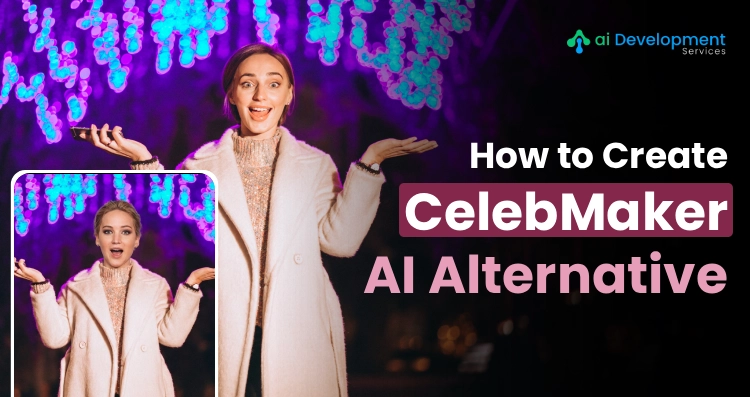
The market for artificial intelligence-based video generation tools is growing phenomenally, with tools such as CelebMaker AI setting the stage for other platforms to follow suit with the generation of celebrity-themed content. As the world continues to explore new ways to keep the audience glued to their screens, the trend for artificial intelligence-based video generation tools has increased manifold. Designing and developing a clone version of the CelebMaker AI tool provides an exciting chance to tap into the existing billion-dollar market with the help of this guide, where you can create your own version of the tool and enter the market by the start of 2026.
What Makes CelebMaker AI a Game-Changer?
CelebMaker AI has revolutionized content creation by allowing users to generate professional-quality videos featuring celebrity-like personas. The platform combines generative AI with an intuitive interface, making it accessible to marketers, content creators, and businesses alike.
Key capabilities include:
- AI-powered face-swapping with celebrity templates
- Text-to-video conversion using natural language prompts
- Voice synthesis that mimics celebrity speech patterns
- High-definition video rendering in minutes
- Extensive library of pre-trained celebrity models
The success of the platform is measured by the democratization of online video production. The process of making a movie, formerly carried out by actors and expensive equipment, can be completed in a matter of minutes using a smartphone. Users of the platform use the content developed here for social media marketing, entertainment, educational content, and brand promotions.
The target audience spans from individual content creators and influencers to marketing agencies and enterprises seeking cost-effective video solutions. This wide appeal has positioned CelebMaker AI as a leader in the generative AI video space.
Why Building a CelebMaker AI Clone is Your Next Big Opportunity
The AI video generation industry is projected to reach $3.5 billion by 2027, growing at a compound annual rate of 19.8%. This explosive growth is driven by several factors that make clone app development in this space particularly attractive.
Market demand is surging because:
- 86% of businesses now use video as a marketing tool.
- AI-generated content reduces production costs by up to 70%.
- Social media platforms prioritize video content in their algorithms.
- Remote work has increased demand for digital content solutions.
The revenue potential is substantial. Successful AI video platforms have revenue streams that include subscription revenue that averages $20-$100/month/user, pay-per-video credits, enterprise deals, and white label agency revenue streams. Successful platforms have reported monthly recurring revenues of >$500K in their very first year of operation.
The competitive landscape, while growing, still offers room for innovation. By focusing on specific niches—whether it's localized content, industry-specific templates, or enhanced customization—new entrants can carve profitable market segments.
From a business perspective, adaptive AI development allows your platform to continuously improve and learn from user interactions, creating a competitive moat that strengthens over time. The combination of recurring revenue, scalable technology, and increasing market demand makes this one of the most promising tech ventures for 2026.
Launch Your CelebMaker AI Clone Today
Must-Have Features for Your AI Celebrity Video Platform
Core Features That Define Success
AI-Powered Face Synthesis: The basic purpose and foundation of your platform is to have a very efficient face-swapping system. To have a face-swapping system, face notion and AI power must integrate and create a powerful generative AI model to map features, expressions, and movements onto the target video.
Celebrity Template Library: AI-Powered Face Synthesis The basic purpose and foundation of your platform is to have a very efficient face-swapping system. To have this system, face notion and AI power must integrate and create a powerful generative AI model to map features, expressions, and movements onto the target video.
Text-to-Video Intelligence: Implement natural language processing that converts written scripts into compelling video content. The system should understand context, emotion, and pacing, automatically generating appropriate facial expressions and gestures that match the narrative.
Voice Cloning Technology: Ability to include voice synthesis capabilities that closely mimic various vocal characteristics of celebrities, such as tone, accent, speech tempo, and emotional expression. The user should have the option to input text and have it narrated in the style of their preferred celebrity with amazing similarity.
User Management System: Build a robust account infrastructure supporting registration, authentication, profile management, and project organization.It includes features like saved projects, video history, favorite templates, and collaborative workspace options for team accounts.
Advanced Features That Set You Apart
Custom Model Training: Allow advanced users to upload reference images and videos to create personalized AI models. This feature appeals to businesses wanting brand ambassadors or influencers seeking unique personas.
Multi-Language Support: Expands your market reach by supporting multiple languages for both interface and video generation. This includes language-specific lip-syncing and culturally appropriate expressions.
Professional Export Options: Offer various resolution options (HD, 4K), format compatibility (MP4, MOV, WebM), and removal of watermarks for premium users. Including direct export to social platforms with optimized formatting.
Real-Time Preview: Provides instant feedback as users adjust parameters. Real-time preview reduces rendering time and improves user satisfaction by allowing iterative refinement before final generation.
Smart Background Replacement: Enables users to place their AI celebrities in custom environments using green screen technology and automated background removal, perfect for product demonstrations or branded content.
The Technology Stack Powering Your Clone
Frontend Architecture
Web Application: React.js remains the optimal choice for building dynamic, responsive web interfaces. Its component-based architecture allows for modular development and easy maintenance. Alternatively, Vue.js offers a lighter footprint with excellent performance for media-heavy applications.
Mobile Development: React Native enables cross-platform development, maintaining a single codebase for iOS and Android. For performance-critical applications, Flutter provides native compilation and smooth animations essential for video preview features.
Backend Infrastructure
Server Framework: Python with Django or Flask dominates AI application development due to extensive machine learning library support. Node.js offers excellent real-time capabilities for handling concurrent video processing requests. Ruby on Rails provides rapid development for MVP launches.
API Design: Implement RESTful API architecture for clear, scalable communication between frontend and backend. Consider GraphQL for complex data requirements, allowing clients to request exactly the data they need, reducing bandwidth for mobile users.
AI and Machine Learning Technologies
Generative AI Models: Leverage pre-trained GANs (Generative Adversarial Networks) for face generation and manipulation. DeepFaceLab and FaceSwap provide open-source foundations, though custom model training yields superior results. Consider Stable Diffusion for certain video generation tasks.
Face Detection and Tracking: OpenCV and Dlib offer robust face detection capabilities. MediaPipe provides real-time facial landmark detection essential for accurate feature mapping. These libraries ensure precise alignment and natural-looking results.
Voice Synthesis: Integrate APIs like ElevenLabs or Resemble AI for high-quality voice cloning. For custom solutions, train models using Tacotron 2 or FastSpeech architectures. Adaptive AI development allows your voice models to improve continuously based on user feedback.
Your Roadmap: From Concept to Launch
Step 1: Strategic Planning and Market Research
Start with a thorough analysis of the market with surveys targeting the intended audience to ascertain pressing needs, requisite functionalities, and the level of willingness to pay up. Additionally, the competition in the market, such as CelebMaker AI, should come under analysis to identify loopholes in the services offered and areas where the new system will have an edge. The unique value proposition has to be established, including areas of concentration such as real estate and e-commerce, as well as the target audience and customization capabilities.
Step 2: User Experience Design
Wireframing comes first—sketch user flows for key journeys, including onboarding, template selection, video creation, payment, and export using tools like Figma or Adobe XD. Design with simplicity like your north star, ensuring AI technology complexity doesn't translate to interface complexity. Users should create their first video within minutes of signing up through progressive disclosure that reveals advanced features gradually as users gain expertise.
Mobile-first is crucial as more than 60% of videos have to be viewed on mobile platforms. So, ensure the interface can easily switch from one screen to another without disturbances, like delivering perfect touch controls, easy navigation on smaller screens, drag-and-drop facilities, etc., to make the entire video-creating process super easy.
Step 3: Backend Development
Architecture your server infrastructure for scalability by implementing microservices for distinct functions like user management, video processing, and AI inference, allowing independent scaling based on demand. Design your database schema carefully considering future growth—normalize relational data to prevent redundancy while denormalizing frequently accessed data for performance, and indexing heavily queried fields for faster retrieval.
Build a robust API with comprehensive documentation and implement versioning from day one to support smooth updates without breaking existing integrations. Use JWT tokens for secure authentication and role-based access control.
Step 4: AI Model Integration
Start with pre-trained generative AI models to accelerate development, then fine-tune them to your specific use cases and celebrity templates. This adaptive AI development approach balances speed-to-market with quality output. Develop a processing pipeline that queues video generation requests, distributes them across GPU workers, and handles failures gracefully with automatic retry mechanisms and progress tracking so users see real-time updates during rendering.
Optimize for speed without sacrificing quality by implementing smart caching for frequently used templates and pre-processing common operations. Consider offering tiered quality options (fast/standard/high), giving users control over render time versus output quality.
Step 5: Frontend Development and Integration
Build your user interface using component libraries like Material-UI or Ant Design for consistent, professional styling. Implement state management solutions such as Redux, MobX, or Context API for complex application state handling. Integrate frontend with backend APIs using Axios or Fetch, implementing proper error handling, loading states, and user feedback for all asynchronous operations, including video uploads with drag-and-drop support and progress indicators.
Create an intuitive video editor interface with timeline visualization, parameter adjustment sliders, and split-screen preview functionality. Real-time parameter changes should be reflected immediately in preview mode, giving users instant feedback on their creative decisions.
Step 6: Rigorous Testing and Quality Assurance
Functional testing verifies every feature that works as specified—creates test cases covering all user paths, edge cases, and error conditions, then automates regression testing to catch bugs introduced by new code. AI model accuracy testing ensures generated videos meet quality standards by establishing benchmarks for face alignment accuracy, expression matching, and lip-sync precision, testing across diverse demographics to identify any bias or quality degradation. Performance optimization addresses bottlenecks through application profiling to identify slow database queries, inefficient algorithms, or memory leaks.
Step 7: Deployment and Launch Strategy
Set up production infrastructure with proper security configurations, SSL certificates, backup systems, and CI/CD pipelines for automated testing and deployment that reduces human error and accelerates updates. If offering mobile apps, prepare App Store and Google Play submissions well in advance since both platforms have review periods that can take days or weeks—factor this into your launch timeline and ensure compliance with all store guidelines regarding content, privacy, and functionality.
Monetization Strategies That Drive Revenue
Freemium Model offers basic functionality free with limitations (watermarked videos, standard quality, limited templates). This reduces barriers to entry, allowing users to experience value before committing financially. Conversion rates for paid plans typically range from 2-5%.
Tiered Subscriptions Create multiple subscription levels:
Basic ($19-29/month): HD exports, 50 videos/month, standard templates
- Pro ($49-79/month): 4K exports, unlimited videos, all templates, priority processing
- Business ($149-299/month): White-label options, API access, custom branding, team accounts
- Annual subscriptions with 20-30% discounts encourage long-term commitments and improve cash flow.
Business Challenges While Creating CelebMaker AI Clone
User Acquisition Costs: Digital advertising is expensive, with customer acquisition costs (CAC) for SaaS products averaging $200-400. Competing against established platforms with marketing budgets requires creativity.
Content Moderation at Scale: As your user base grows, manually reviewing every generated video becomes impossible, yet allowing harmful content damages your brand and legal standing.
Competitive Differentiation: The app development space grows crowded. Standing out requires more than feature parity with existing solutions.
Marketing Your AI Celebrity Video Platform
Content Marketing and SEO: reate valuable content attracting organic traffic. Publish tutorials, industry insights, and use case studies targeting keywords like "AI video generator," "celebrity video creator," "generative AI content," and "white label SEO services". Video content demonstrating your platform's capabilities drives engagement and conversions. Optimize for long-tail keywords where competition is lower.
Social Media Strategy: Showcase user-generated content highlighting your platform's capabilities. Partner with content creators who can authentically demonstrate your tool to their audiences. Run contests encouraging users to create and share videos with branded hashtags. Focus on visual platforms like Instagram, TikTok, and YouTube, where video content thrives.
Influencer Partnerships: Identify micro-influencers (10K-100K followers) in your target niche offering high engagement at reasonable costs. Provide them with free premium access in exchange for honest reviews and demonstrations. Authenticity matters more than follower count—audiences trust genuine recommendations.
App Store Optimization: If offering mobile apps, ASO is critical. Research high-volume keywords in your category. Craft compelling app descriptions highlighting unique features and benefits. Use high-quality screenshots and preview videos demonstrating core functionality. Encourage satisfied users to leave positive reviews, improving your store ranking.
Paid Advertising: Start with targeted campaigns on Facebook, Instagram, and Google Ads. Use lookalike audiences based on your early adopters. Retarget website visitors who didn't convert. A/B tests ad creative, messaging, and landing pages, continuously optimizing cost per acquisition. Set strict ROI targets, ensuring paid channels remain profitable.
Partnership and Integration: Integrate with complementary platforms. Partner with social media scheduling tools, video editing software, or content management systems. Each integration expands your distribution, reaching new audiences. Explore affiliate partnerships where complementary businesses earn commissions for referrals.
PR and Media Outreach: Pitch your story to technology publications, marketing blogs, and industry media. Frame your narrative around trends—how generative AI is democratizing video production or transforming content marketing. Provide exclusive early access to journalists, building relationships and securing coverage.
The Future of AI Video Generation
Generative AI technology evolves rapidly, and staying ahead requires continuous innovation. Real-time video generation will soon become standard, eliminating rendering delays entirely. Expect AI models to handle increasingly complex scenarios—multiple characters, sophisticated interactions, and photorealistic environments.
Personalization will deepen beyond simple face-swapping. Future platforms will generate entirely custom characters based on brand guidelines, personality traits, and specific use cases. Adaptive AI development will enable platforms that learn individual user preferences, automatically suggesting templates, styles, and content approaches.
Regulatory frameworks will mature, bringing clarity to this emerging space. Forward-thinking platforms that prioritize transparency, ethics, and compliance will thrive as standards crystallize. Integration with augmented and virtual reality presents exciting opportunities—imagine AI celebrity avatars in immersive environments.
The creator economy continues to expand, and tools empowering individual creators will capture significant value. Your CelebMaker AI clone can position itself at this intersection of technology and creativity, enabling the next generation of digital storytellers.
Why Choose AI Development Service for Clone App Development?
Building a CelebMaker AI clone requires specialized knowledge spanning generative AI, computer vision, cloud architecture, and user experience design. AI Development Service brings battle-tested expertise accumulated across dozens of similar projects, helping you avoid costly mistakes and technical dead-ends. Their team stays current with rapidly evolving AI frameworks, algorithm improvements, and best practices that would take months for an in-house team to master.
By partnering with AI Development Service, you gain immediate access to specialists who've already solved the complex challenges you'll face—from optimizing GPU utilization to implementing efficient video processing pipelines.
Ready to Build Your AI Clone Platform?
Conclusion
Building a CelebMaker AI clone represents an exceptional opportunity in the rapidly growing generative AI market. While the technical and legal complexities require careful navigation, the potential rewards—both financial and innovative—are substantial. Success demands more than just replicating existing features; it requires understanding your target users, delivering exceptional experiences, and continuously adapting to this dynamic space. With the right team, technology, and strategy, your AI celebrity video platform can capture meaningful market share in 2026 and beyond. Start planning today, and you could be launching tomorrow's leading adaptive AI development platform in video generation.
Frequently Asked Questions
Q1: How long does it take to develop a CelebMaker AI clone?
Ans. Development timelines typically range from 6-12 months depending on feature complexity and team size. An MVP with core functionality (basic face swap, limited templates, standard video quality) can launch in 4-6 months. A feature-complete platform with advanced capabilities requires 9-12 months. Ongoing development continues post-launch for updates and improvements.
Q2: Do I need AI expertise to build this platform?
Ans. While having AI/ML engineers on your team is crucial, you don't personally need to be an AI expert. Partner with experienced generative AI developers or hire specialists. Many cloud platforms offer pre-built AI services, reducing the technical barrier. Alternatively, consider working with development agencies specializing in clone app development who bring existing expertise.
Q3: What are the biggest legal risks?
Ans. The primary legal concerns are right of publicity violations (using celebrity likenesses without permission), potential copyright infringement, and misuse of your platform for creating deceptive or harmful content. Mitigate these risks through clear terms of service, content moderation, transparent disclaimers about synthetic content, and consultation with intellectual property attorneys before launch.
Q4: How much can I charge users for this service?
Ans. Pricing depends on your target market and features. Consumer-focused platforms typically charge $19-79 monthly for subscriptions. Enterprise solutions command $149-499+ monthly. Credit-based models charge $5-15 per video. Research competitor pricing and survey your target audience to find optimal pricing. Start higher and adjust downward based on conversion data rather than underpricing initially.
Q5: Can I use existing celebrity faces in my templates?
Ans. Using recognizable celebrity faces without permission likely violates right of publicity laws and could result in legal action. Instead, create "style-inspired" personas that capture characteristics without directly copying specific individuals, using public domain figures, or investing in licensing agreements. Some platforms create entirely fictional characters or allow users to upload their own faces for personalization, avoiding celebrity likeness issues entirely.