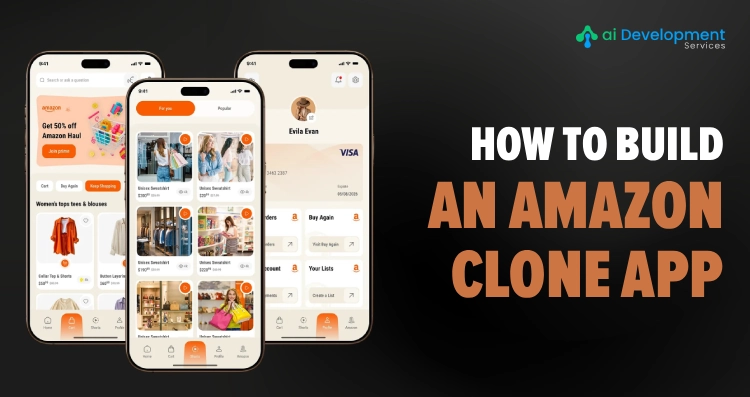
The e-commerce industry continues to expand at an unprecedented rate, and building a marketplace like Amazon has never been more achievable thanks to modern technology and adaptive AI development. Whether you're an entrepreneur looking to enter the online retail space or a business seeking to expand your digital presence, this comprehensive guide will walk you through everything you need to know about creating your own Amazon-like platform in 2026.
The E-commerce Landscape: Key Statistics for 2026
Understanding the current market dynamics is crucial before embarking on your ecommerce app development journey. Here are the latest statistics that showcase the immense opportunity in the e-commerce sector:
Global Market Size
Global e-commerce sales are projected to reach $6.88 trillion in 2026, representing a 7.2% increase from the previous year. This accounts for 21.1% of all retail sales worldwide, demonstrating the dominant role online shopping plays in modern consumer behavior.
Mobile Commerce Dominance
Mobile commerce now accounts for nearly 59% of total online retail sales, with approximately 1.65 billion people expected to shop via smartphone in 2026. This underscores the critical importance of mobile-first design in your ecommerce app development strategy.
AI in E-commerce
The AI in the e-commerce market has grown to $9.01 billion and is expected to skyrocket to $64.03 billion by 2034. 84% of e-commerce businesses rank AI as their highest priority, making adaptive AI development and generative AI development essential components of any modern marketplace platform.
Regional Growth
China, the United States, and Western Europe account for 80.5% of global sales, while emerging markets in Southeast Asia and Latin America show the fastest growth rates.
Planning Your Amazon Clone 2026
Defining Your Marketplace Strategy
Before diving into development, you need to clearly define your marketplace's scope and positioning. Will you operate as a multi-vendor marketplace allowing third-party sellers, or focus on a curated single-vendor model? Consider whether you're targeting B2C consumers, B2B businesses, or a hybrid approach.
Your niche selection is equally critical. While Amazon serves as a general marketplace, focusing on specific product categories or industries can help you establish market dominance more quickly.
Essential Features to Include
A successful Amazon clone requires core functionalities across several key areas. The user management system should provide secure registration and authentication with social login options, two-factor authentication for enhanced security, and role-based access control for buyers, sellers, and administrators.
The product catalog and discovery features need comprehensive product listings with multiple images and videos, advanced search capabilities with filters and faceted navigation, organized category and subcategory structures, and product comparison functionality. For the shopping experience, implement a persistent shopping cart that works across devices, wishlist and save-for-later options, one-click checkout capabilities, and a guest checkout option to reduce friction.
Payment and order processing must support multiple payment gateway integrations, including credit cards, digital wallets, and buy-now-pay-later services, with secure PCI-compliant processing, order tracking with status updates, and automated invoice and receipt generation. Vendor features should include a comprehensive seller onboarding and verification system, dedicated seller dashboards with analytics, inventory management tools, and commission and payout management.
Advanced AI-Powered Features
Leveraging adaptive AI development can significantly enhance your platform's competitiveness:
Personalization Engine: Using machine learning algorithms, your platform can deliver personalized product recommendations based on browsing history, purchase patterns, and user preferences. Product recommendations can increase revenue by up to 300%, conversions by 150%, and average order value by 50%.
AI Chatbots: 80% of retail and e-commerce businesses use AI chatbots or plan to use them in the near future. These AI apps provide 24/7 customer support, answer queries instantly, and guide users through the purchase process.
Dynamic Pricing: AI algorithms can analyze market demand, competitor pricing, and inventory levels to optimize pricing strategies in real-time.
Visual Search: Allows customers to search for products using images, making product discovery more intuitive and engaging.
Get Your Custom Clone App Built Fast
Technology Stack Selection in 2026
Frontend Technologies
For web interfaces, React with Next.js offers excellent performance and SEO capabilities, making it ideal for SEO for HVAC company websites. For mobile applications, React Native or Flutter enables cross-platform development, reducing time and cost while maintaining native-like performance.
Modern CSS frameworks like Tailwind CSS or Material-UI accelerate UI development while ensuring responsive, attractive designs across all devices.
Backend Architecture
Choose between Node.js with Express, Python with Django or FastAPI, or Java with Spring Boot based on your team's expertise and scalability requirements. Consider a microservices architecture for better scalability and maintainability as your platform grows.
Implement GraphQL for flexible, efficient API queries that reduce over-fetching and improve performance, or use REST APIs for simpler, more conventional API structures.
Database Solutions
A combination of database types works best for comprehensive ecommerce platforms. Use PostgreSQL or MySQL for relational data such as orders, transactions, and user accounts. MongoDB works well for product catalogs and flexible schema requirements, while Redis handles caching, session management, and real-time features. Elasticsearch provides powerful, fast search functionality.
Cloud Infrastructure
AWS, Google Cloud, or Microsoft Azure provide the scalability and reliability needed for e-commerce operations. Implement CDN (Content Delivery Network) for fast content delivery worldwide, auto-scaling to handle traffic spikes during sales events, and robust backup and disaster recovery systems.
Building Core Functionality
- User Authentication and Security
Implement OAuth 2.0 for secure social logins alongside traditional email/password authentication. Add two-factor authentication as a security layer, especially for seller accounts and high-value transactions. Use JWT (JSON Web Tokens) for secure, stateless authentication across your distributed systems.
- Product Management System
Create an intuitive product management interface that supports multiple product images and 360-degree views, detailed product descriptions with rich text formatting, variant management for size, color, and style options, SKU and barcode tracking, and bulk product upload via CSV or API.
- Search and Discovery
Implement Elasticsearch for powerful full-text search capabilities. Including autocomplete suggestions, typo tolerance, and synonym matching to improve user experience. Create faceted search with filters for price, brand, ratings, and category. Implement search analytics to understand user intent and optimize product discovery.
- Shopping Cart and Checkout
Design a frictionless checkout process with a persistent cart that syncs across devices, a one-page checkout option, multiple shipping address support, promo code and discount application, real-time tax and shipping calculations, and multiple payment options including digital wallets.
- Order Management
Build a comprehensive order processing system that handles order confirmation and email notifications, real-time order status tracking, automated inventory updates, seller notification systems, return and refund processing, and customer feedback collection.
Vendor Management Features
- Seller Onboarding
Create a streamlined onboarding process that includes registration with business verification, document collection for KYC compliance, store customization options, product listing guidelines and training, and payment and payout setup.
- Seller Dashboard
Provide sellers with comprehensive analytics including sales reports and revenue tracking, product performance metrics, customer reviews and ratings, inventory status and alerts, order fulfillment tools, and marketing and promotional tools.
- Commission Structure
Implement flexible commission models such as percentage-based commission per sale, category-specific commission rates, tiered commission based on sales volume, subscription-based seller plans, and featured listing and advertising options.
Leveraging AI Apps and Adaptive AI Development
The integration of artificial intelligence represents the competitive edge in modern ecommerce app development. Here's how to implement AI effectively:
Recommendation Systems
Deploy collaborative filtering algorithms that analyze user behavior patterns across your platform. Use content-based filtering to recommend products with similar attributes to items users have viewed or purchased. Implement hybrid approaches that combine multiple recommendation strategies for optimal results.
Predictive Analytics
Use AI to forecast demand, optimize inventory levels, and predict trending products. This helps reduce stockouts and overstock situations while maximizing profitability.
Fraud Detection
Machine learning models can identify suspicious transactions, unusual behavior patterns, and potential fraud attempts in real-time, protecting both your business and customers.
Customer Service Automation
Around 89% of retailers are using AI or testing it through pilot programs. Implement AI-powered chatbots that handle common queries, process returns, track orders, and escalate complex issues to human agents when necessary.
Mobile-First Development Strategy
With mobile commerce driving 59% of online sales, we prioritize mobile experiences. Consider Progressive Web Apps (PWAs) for offline functionality and app-like experiences. Develop native iOS and Android apps using React Native or Flutter for push notifications, camera integration for visual search, and biometric authentication.
Security and Compliance
Implement end-to-end encryption, comply with GDPR and CCPA regulations, conduct regular security audits, and ensure PCI DSS compliance for payments. Deploy multi-layered fraud detection using machine learning to identify suspicious patterns.
Testing and Quality Assurance
Implement comprehensive testing including unit tests, integration tests, end-to-end testing, and load testing. Optimize performance through database query optimization, effective caching, lazy loading, and code splitting for faster load times.
Deployment and DevOps
Set up automated CI/CD pipelines for testing and deployment, implement staging environments, and use application performance monitoring tools. Maintain automated backups and establish comprehensive error-tracking systems.
Why Choose AI Development Service for Clone App Development?
When embarking on building an Amazon clone, partnering with experienced professionals can dramatically accelerate your time to market and ensure best practices. AI Development Service specializes in creating sophisticated e-commerce platforms powered by cutting-edge AI technology.
Expertise in Adaptive AI Development
AI Development Service brings deep expertise in adaptive AI development, creating systems that continuously learn from user behavior and market trends. Their team implements machine learning models that evolve with your business, ensuring your platform stays competitive as customer preferences shift.
Generative AI Development Capabilities
Leveraging generative AI development, AI Development Service can help you implement features like AI-generated product descriptions, automated content creation for marketing, intelligent chatbots with natural language understanding, and personalized email campaigns at scale.
Comprehensive Ecommerce App Development
With years of experience in ecommerce app development, the team understands the nuances of building scalable marketplaces. They provide end-to-end solutions including architecture design, frontend and backend development, payment gateway integration, security implementation, and ongoing maintenance and support.
Proven Track Record in AI Apps
AI Development Service has successfully delivered numerous AI apps across various industries, bringing best practices and proven methodologies to every project. Their portfolio demonstrates expertise in building robust, scalable platforms that handle millions of transactions.
Full-Stack AI App Development
From concept to deployment, AI Development Service offers complete AI app development services, including requirements analysis and planning, UI/UX design optimized for conversions, scalable cloud infrastructure setup, third-party integrations and APIs, and comprehensive testing and quality assurance.
By choosing AI Development Service, you gain a partner committed to your success, providing not just development services but strategic guidance to help your Amazon clone thrive in the competitive e-commerce landscape.
Cost Estimation and Timeline
Development Costs
Building an Amazon clone requires significant investment. A basic MVP (Minimum Viable Product) might range from $50,000 to $150,000, while a comprehensive platform with advanced AI features can exceed $300,000. Costs vary based on features, team location, and development timeline.
Operational Costs
The budget for ongoing expenses includes cloud hosting and infrastructure ($500-$5,000+ monthly depending on scale), payment processing fees (2-3% of transaction value), third-party service subscriptions for email, SMS, analytics, customer support tools, and regular maintenance and updates.
Timeline Expectations
Expect 3-6 months for MVP development, 6-12 months for a feature-rich platform, and ongoing development for continuous improvements and new features.
Scaling Your Platform
Handling Growth
As your platform grows, implement database sharding and replication for horizontal scaling, transition to microservices architecture for better scalability, deploy load balancing across multiple servers, and expand globally with regional data centers.
Marketing and Acquisition
Invest in SEO optimization for organic traffic, leverage social media marketing and influencer partnerships, implement referral programs to encourage viral growth, and deploy email marketing automation for customer retention.
Legal Considerations
Ensure you have proper legal foundations, including comprehensive terms of service and privacy policies, seller agreements and dispute resolution procedures, intellectual property protection, and compliance with consumer protection laws in all operating regions.
Ready to Bring Your App Idea to Life?
Frequently Asked Questions (FAQs)
1. How long does it take to build an Amazon clone?
A basic MVP can be developed in 3-6 months, while a fully-featured marketplace with advanced AI capabilities typically requires 6-12 months. The timeline depends on feature complexity, team size, and whether you're building custom solutions or using existing frameworks.
2. What is the estimated cost of developing an Amazon-like marketplace?
Development costs typically range from $50,000 for a basic MVP to over $300,000 for a comprehensive platform with advanced features like AI-powered recommendations, multi-vendor support, and mobile apps. Ongoing operational costs should also be factored into your budget.
3. Do I need AI features in my e-commerce platform?
While not mandatory, AI features provide significant competitive advantages. Product recommendations can increase revenue by up to 300%, AI chatbots improve customer service while reducing costs, and predictive analytics optimize inventory management. Given that 84% of e-commerce businesses prioritize AI, incorporating these features is highly recommended.
4. Should I build native mobile apps or a responsive website?
Both are important. Start with a responsive, mobile-optimized website, then develop native mobile apps as your user base grows. Mobile commerce accounts for 59% of online sales, making mobile optimization critical. Progressive Web Apps (PWAs) offer a middle ground, providing app-like experiences without requiring app store downloads.
5. How do I ensure my platform can handle high traffic and scale effectively?
Implement cloud infrastructure with auto-scaling capabilities, use CDN for content delivery, deploy caching strategies at multiple levels, design a microservices architecture for flexibility, and conduct regular load testing. Starting with scalable cloud platforms like AWS, Google Cloud, or Azure ensures you can grow without major infrastructure overhauls.