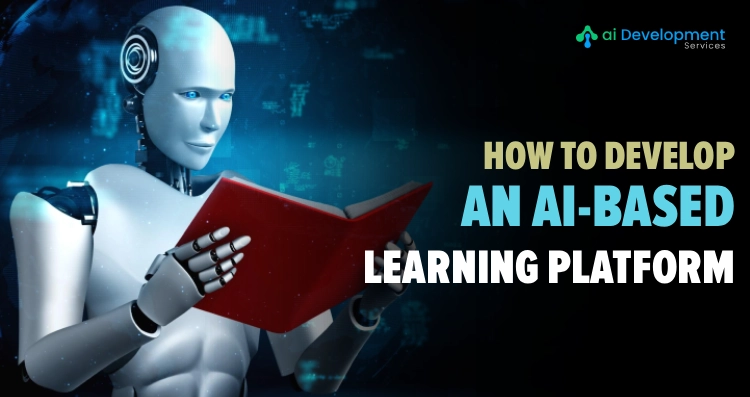
The education sector is witnessing a paradigm shift. The conventional method of learning, which was standardized and one-size-fits-all, is being replaced by intelligent learning. If you have ever considered developing an intelligent learning platform, this is the best time to make your dreams come true.
Key Takeaways:
- Modern learning platforms adapt content, pace, and difficulty to each individual learner, dramatically improving engagement and outcomes compared to one-size-fits-all approaches.
- Clearly define who you're serving and what problems you're solving before diving into development—successful platforms solve real educational challenges.
- Custom development offers control, white-label provides speed, and hybrid approaches balance both—select based on your timeline, budget, and competitive positioning needs.
- Start with core features that work, gather real user data, and let systems improve over time—perfection is the enemy of progress in EdTech.
- According to a study by McKinsey & Company, students using personalized learning platforms can improve learning outcomes by up to 30% compared to traditional methods.
Why Smart Learning Platforms Matter
Each student learns in a different way. Some students understand concepts easily, while others take longer to understand. Some students are visual learners, while others are better at learning through reading or by doing. However, for many years, most learning systems have presented the same information in the same way to all students.
This is exactly what modern technology changes.
Smart learning platforms can adapt in real-time to each student's needs, pace, and learning style. They provide personalized recommendations, instant feedback, and insights that help both learners and educators achieve better outcomes. Companies like Duolingo have proven this works—keeping over 30 million users engaged through personalized, adaptive learning experiences.
The numbers speak for themselves. Organizations using intelligent learning platforms report significant improvements in engagement, retention, and learning outcomes. Students stay motivated because the content adjusts to keep them challenged but not overwhelmed. Educators gain valuable insights about where students struggle and can intervene at exactly the right moment.
Essential Features Your AI Learning Platform Needs
Smart Content Recommendations
The platform analyzes how a student interacts with content—what they complete, where they struggle, how long they spend on topics—and recommends exactly what they should learn next. This keeps students moving forward on an optimized learning path rather than getting lost or bored.
Intelligent Tutoring and Support
Modern chatbots and virtual assistants go far beyond simple FAQs. They can understand complex student questions, provide explanations in multiple ways, and guide learners through difficult concepts. Available 24/7, these virtual teaching assistants ensure students never feel stuck or alone in their learning journey.
Adaptive Learning Paths
Every student's journey should be unique. Adaptive AI creates dynamic curricula that reshape themselves based on performance. If a student already understands a concept, the platform moves them forward. If they're struggling, it provides additional practice and alternative explanations. Multiple students can reach the same learning goal through completely different paths.
Automated Assessment and Feedback
Gone are the days of waiting weeks for test results. Smart systems provide instant grading with detailed, personalized feedback. More importantly, they can evaluate open-ended responses, essays, and complex problem-solving—not just multiple-choice questions. Students learn faster when they receive immediate, constructive feedback.
Predictive Analytics
Perhaps the most powerful feature is the ability to predict student success. By analyzing patterns in learning behavior, the platform can identify students at risk of falling behind before they actually do. This allows educators to intervene early with targeted support, dramatically improving completion rates and outcomes.
Planning Your AI-based Learning Platform
Before writing a single line of code, you need clarity on who you're serving and how you'll serve them.
Define your target audience precisely. Are you building for K-12 students, university learners, corporate professionals, or lifelong learners? Each audience has different needs, preferences, and technological comfort levels. A platform for elementary students needs to be intuitive and engaging with minimal text, while corporate professionals expect sophisticated analytics and integration with workplace tools.
Choose your learning model. Will your platform offer self-paced courses, instructor-led programs, or a blend of both? Will you focus on microlearning (bite-sized lessons) or comprehensive curricula? These decisions shape everything from your technical architecture to your user interface design.
Map the user journey from signup to mastery. What does the student experience look like? How do educators interact with the platform? What controls do administrators need? Understanding these journeys helps you prioritize features and create intuitive workflows.
Develop your content strategy. Quality material is essential. Whether you're creating original courses or curating existing content, it must be properly structured. The system learns from how students interact with content, so well-organized, tagged, and accessible materials are crucial for effective AI study tool development.
Launch Your AI Learning Platform Faster Than You Think
Building Your Platform: Development Approaches
You have three main paths to building your learning platform, each with distinct advantages.
Custom Development gives you complete control and the ability to create truly unique features. This approach requires higher investment and longer development time, but it's ideal if you have specific requirements that off-the-shelf solutions can't meet or if your unique positioning demands custom functionality. Professional AI app development ensures your platform is built to scale and perform.
White-Label Solutions let you launch quickly using proven platforms. You can rebrand existing technology and get to market fast with lower upfront costs. The trade-off is limited customization—you're constrained by what the platform provider offers. This works well for testing market demand or when speed matters more than uniqueness.
The Hybrid Approach is the best of both worlds. Begin with an existing platform for core functionality and overlay your own unique intelligent features. This approach strikes the right balance between speed to market and differentiation, and is the path that most successful educational entrepreneurs follow.
Whichever path you choose, focus on designing for learning, not just aesthetics. Your interface should minimize distractions and keep students focused on content. Mobile optimization is non-negotiable—many learners study on phones and tablets. And accessibility features aren't optional; they ensure everyone can benefit from your platform.
Key Technologies to Consider
Natural Language Processing
To understand queries from students and provide intelligent answers, it is necessary to have a high level of language understanding. A skilled NLP developer can incorporate functionalities that have the ability to understand context, interpret the sentiment of feedback from students, and provide conversational interfaces that are natural and helpful.
Adaptive Learning Systems
The key to personalization is based on adaptive systems that adapt to the needs of individual students. Adaptive systems monitor progress, detect gaps in knowledge, and dynamically adjust levels of difficulty. The implementation of adaptive AI systems needs knowledge of machine learning algorithms and educational psychology.
Data Analytics and Visualization
Powerful dashboards give educators actionable insights. Track engagement metrics, completion rates, assessment scores, and learning patterns. Visualize data in ways that help teachers and administrators make informed decisions about curriculum and intervention strategies.
Integration Capabilities
Your platform should not be a standalone system. You should design for integration with video conferencing solutions, media libraries, student management systems, and collaboration software. An API-first design will ensure that you can easily integrate with other education software.
Implementation Best Practices
Start with Data Collection
Your platform needs to collect information about how students learn while respecting their privacy. Track which content they engage with, where they struggle, how long they spend on topics, and what paths lead to success. This behavioral data powers your platform's personalization capabilities.
Begin Simply and Improve Continuously
Your initial features don't need to be perfect. They just need to work well enough to provide value while collecting data to get better. As more students use your platform, it becomes smarter, creating a virtuous cycle of improvement.
Testing is Critical
Beta test with real students and educators before your full launch. Measure what truly matters: engagement rates, completion rates, learning outcomes, and user satisfaction. Use this feedback to iterate rapidly. The platforms that win aren't those with the most features—they're the ones that solve real problems and continuously improve.
Privacy, Ethics, and Building Trust
Educational data is sensitive, and trust is everything. Students, parents, and educators need confidence that you're protecting information and using technology responsibly.
Data protection must be foundational. Comply with regulations like FERPA (for US schools), COPPA (for children under 13), and GDPR (for European users). Use encryption, implement secure storage, and give users control over their information. Be transparent about what data you collect and how you use it.
Guard against bias. If your training data isn't diverse, your system might inadvertently favor certain learning styles or cultural backgrounds. Regularly audit your algorithms for fairness. Ensure your recommendations work equally well for all students, regardless of their background.
Maintain human oversight. Technology should augment educators, not replace them. Teachers and instructional designers should be able to review and override system recommendations when needed. Transparency matters too—explain how your platform makes decisions in terms people can understand.
Launching and Growing Your Platform
A successful launch requires more than just flipping a switch. Start with a beta program to identify and fix issues before they affect thousands of users. Create compelling case studies showing real results. Build buzz in educational communities through forums, conferences, and social media.
When marketing your platform, communicate benefits in simple terms. Avoid technical jargon. Instead of complex terminology, talk about "personalized learning that adapts to each student." Demonstrate clear ROI for schools and businesses: improved completion rates, reduced training time, better learning outcomes.
Consider a freemium model—free basic access with premium features available through subscription. This lets users experience your platform's value before committing financially. For institutional clients, we offer licensing packages based on number of users or feature sets.
As you grow, ensure your infrastructure scales smoothly. Nothing kills momentum like a platform that crashes when usage spikes. Expand your course offerings strategically based on user demand and market opportunities. Build a community around your platform through forums, user groups, and success stories.
Why Partner with AI Development Service?
Building an intelligent learning platform is complex. You need expertise in machine learning, education technology, user experience design, and scalable architecture. That's a lot to coordinate, especially if this isn't your core competency.
AI Development Service specializes in creating intelligent learning solutions that deliver real results. We bring together technical expertise and a deep understanding of how people learn. Our team has helped educational institutions, EdTech startups, and corporate training departments transform their vision into successful platforms.
We offer end-to-end development—from initial concept to launch and beyond. Our custom solutions are tailored to your unique requirements while leveraging proven best practices. We handle the technical complexity so you can focus on your educational mission.
Our services include custom AI platform development, intelligent feature integration with existing systems, content recommendation engines, learning analytics, and ongoing optimization. We've helped clients achieve 40% increases in student engagement and 60% reductions in development time compared to building in-house.
What sets us apart is our education-first approach. We understand learning science, not just code. We focus on outcomes that matter: student achievement, engagement, and retention. Our platforms are built to scale, using cloud infrastructure that handles growth smoothly.
Whether you need ai study tool development, comprehensive ai app development, an experienced nlp developer, or adaptive ai implementation, our team has the proven expertise to bring your vision to life.
Ready to Transform Education with Your AI Learning Platform?
The Future of Learning Starts Now
The educational world is changing rapidly. Students expect personalized experiences. Educators need tools that amplify their impact. Businesses require training that delivers results efficiently. Modern learning platforms meet all these needs.
Your platform can be part of this transformation. Whether you're an educational institution looking to modernize, an entrepreneur with a vision, or a business seeking to revolutionize employee training, the technology is ready and the market is waiting.
Don't let technical challenges hold you back. Partner with experts who understand both technology and education. Let's build something that changes lives through better learning.
Frequently Asked Questions
1. How long does it take to develop an AI-based learning platform?
Ans. Development timelines vary based on complexity and features. A basic MVP can be ready in 3-4 months, while a fully-featured platform typically takes 6-9 months. Custom AI app development with advanced personalization features may require 9-12 months for comprehensive implementation.
2. What's the average cost to build an intelligent learning platform?
Ans. Costs range widely depending on your approach. White-label solutions start around $10,000-$30,000, while custom platforms range from $50,000 to $200,000+. Factors include feature complexity, number of integrations, and whether you need specialized expertise like an nlp developer for conversational interfaces.
3. Do I need technical expertise to launch a learning platform?
Ans. Not necessarily. While technical knowledge helps, many successful platforms are built by educators partnering with development teams. Focus on understanding your learners' needs and educational goals—technical partners can handle the implementation of adaptive ai and other complex features.
4. How do adaptive learning systems actually work?
Ans. Adaptive ai systems track student interactions, assess performance patterns, and adjust content difficulty in real-time. They use algorithms to identify knowledge gaps, predict struggle points, and recommend personalized learning paths. The system becomes more accurate as it collects more student data.
5. What regulations do I need to comply with for student data?
Ans. Key regulations include FERPA (US educational records), COPPA (children under 13), and GDPR (European users). You'll need secure data storage, encryption, clear privacy policies, and parental consent mechanisms for younger learners. Compliance is essential for AI study tool development to build trust with schools and parents.
Related Posts:
1. How to Create a Quizlet Clone: AI Study Tool2. How to Develop an AI-Powered Restaurant App
3. What is the Cost to Develop an AI Companion App
4. How to Create an AI Companion App like Replika