Key Takeaways:
- AI-powered restaurant apps increase order accuracy by 95% and reduce wait times by up to 40%.
- Personalized recommendations through machine learning can boost average order values by 20-30%.
- The food delivery app market is projected to reach $213 billion by 2030.
- Restaurant apps with AI chatbots handle 70% of customer inquiries without human intervention.
- Voice-enabled ordering and AR menu visualization are becoming standard features customers expect in 2026.
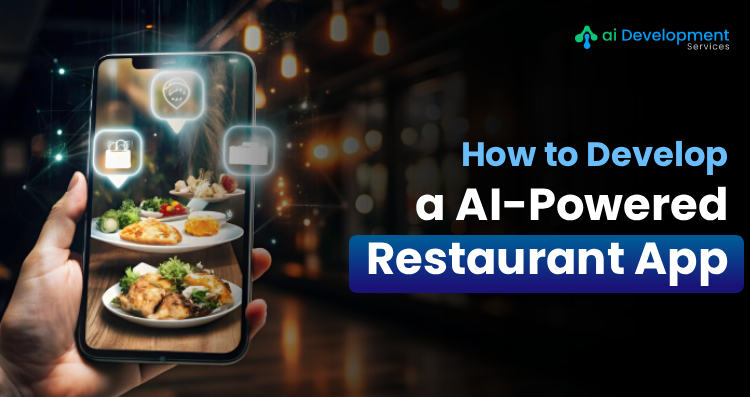
The Restaurant Business Just Went Digital - And Here to Stay! The restaurant business has shifted to a digital transformation that simply can’t be overlooked. Whether it’s a local café or a global chain of restaurants, mobile application technology has simply become a tool for survival in this industry. Customers are demanding streamlined ordering, curated recommendations, automatic reservations, and cashless payments - and they all must have it in the palm of their hands. However, a mobile application alone won’t cut it in this industry. The AI-powered Food Truck Restaurant App will help take this industry to a whole new dimension where advanced algorithms can predict what customers would like while saving a fortune in costs.
What Is an AI-Powered Restaurant App?
An AI-powered restaurant app is a mobile application that leverages artificial intelligence and machine learning to enhance both the customer experience and restaurant operations. Unlike traditional restaurant apps that simply display menus and process orders, AI-powered versions actively learn from user behavior, predict preferences, and provide intelligent recommendations.
When you compare this new technology with an ordinary ordering application, an ordinary application is like an order-taking system, while an ordinary application is like an intelligent dining companion. An ordinary application will display you on the menu, and you can order from there.
Modern AI restaurant apps integrate multiple technologies, including natural language processing for chatbots and voice ordering, computer vision for food recognition and quality control, machine learning for personalized recommendations, predictive analytics for demand forecasting, and sentiment analysis to understand customer feedback.
The result is an app that feels intuitive, helpful, and increasingly essential to the dining experience—whether customers are ordering delivery, making reservations, or dining in.
Need Help Developing Your Restaurant App?
Why Restaurants Need AI-Powered Apps in 2026
Understanding these benefits helps justify the investment in AI-powered app development.
Meeting Changed Customer Expectations
The lockdown has disrupted eating habits and practices as consumers continue to expect digital firsts, including mobile ordering, cashless payments, real-time tracking, and personalized services. AI technology has made it possible for restaurants to meet these changing consumer needs without necessarily having greater numbers of employees. Eateries with basic apps might end up losing their clients to competitors with better apps.
Solving Labor Challenges
The industry still struggles to recruit labor and retain its workforce. These AI applications minimize labor dependence in teams to process orders and manage reservations and general inquiries, thereby allowing smaller teams to handle more customers and devote more time to tasks that require specialized expertise.
Reducing Operational Costs
AI delivers measurable cost savings through inventory optimization that reduces waste by 20-30%, predictive ordering that prevents both stockouts and overordering, intelligent scheduling that matches staff to actual demand, and automated customer service reducing support costs. These efficiencies directly impact profitability, often covering app development costs within the first year.
Increasing Revenue Through Personalization
Machine-learning algorithms analyze ordering patterns and suggest items customers are likely to enjoy, increasing average order values by 20-30%. AI also identifies optimal times for promotions, creates targeted marketing campaigns, implements dynamic pricing during peak and slow periods, and recognizes high-value customers for special treatment.
Competitive Differentiation
As major chains invest heavily in AI capabilities, independent restaurants need similar technology to compete. AI features like AR menu visualization, voice ordering, dietary recommendation engines, and predictive wait times create memorable experiences that build customer loyalty and generate positive reviews.
Data-Driven Decision Making
Each and every transaction, reservation, and engagement results in the collection of data. It is processed by AI to analyze the buying preferences and behaviors of customers, recommendations or deletion suggestions related to menu items, and seasonal demand and operational inefficiency analysis, among other functions AI performs in restaurants and restaurant-related businesses.
Future-Proofing the Business
AI technology advances at a rapid pace. It helps restaurants develop their own strengths through their investments in AI technology today, such as autonomous delivery solutions, robotics in restaurants, personalized nutrition advice for consumers, and seamless omnichannel experiences in restaurants. It helps restaurants build barriers to competition through early adopter advantages.
Step-by-Step Process to Develop an AI Restaurant App
Building an effective AI-powered restaurant app requires careful planning and execution across multiple phases.
Step 1: Define Your Vision and Goals
Start with clarity about what problem you're solving. Are you building an app for a single restaurant, a chain, or a platform connecting multiple restaurants? Define your primary objectives, such as increasing online orders, improving customer retention, reducing operational costs, or expanding delivery radius.
Document specific success metrics upfront. How will you measure whether the app succeeds? Metrics might include daily active users, average order value, customer retention rate, order accuracy percentage, or cost savings from reduced waste.
Step 2: Conduct Market Research
Analyze competitor apps thoroughly. Download and use apps from both direct competitors and industry leaders like DoorDash, Uber Eats, or OpenTable. What features do they offer? Where do they fall short? What do customer reviews praise or criticize?
Research your specific market. What dining preferences dominate your area? What payment methods are popular? What languages should you support? Understanding the local context prevents building features nobody wants while missing ones everyone expects.
Step 3: Choose Your Development Approach
You have several paths for building your app:
Native development creates separate apps for iOS and Android using Swift/Objective-C and Java/Kotlin respectively. This approach delivers the best performance and full access to device features but requires maintaining two codebases.
Cross-platform development uses frameworks like React Native or Flutter to build a codebase that runs on both platforms. This reduces development time and cost while still providing native-like performance for most use cases.
Hybrid development creates web apps wrapped in native containers. This is the fastest and cheapest approach but often results in slower performance and limited access to device capabilities.
Step 4: Design the User Experience
Great restaurant apps balance functionality with simplicity. Design principles include minimizing steps from opening the app to completing an order, using high-quality food photography that makes items appealing, implementing intuitive navigation that doesn't require instructions, and ensuring the app works flawlessly even with poor internet connections.
Create detailed wireframes for all major user flows, including browsing menus and filtering by dietary needs, customizing orders with modifications, checking out and choosing delivery or pickup, tracking order status in real-time, and accessing order history and reordering favorites.
Step 5: Develop Core Functionality
Implementation begins with building fundamental features before adding AI sophistication. Core capabilities include user registration and profile management, menu display with categories and search, shopping cart with modification options, secure payment processing, order confirmation and tracking, and push notifications for order updates.
Ensure robust backend infrastructure that handles user authentication and data security, menu management and real-time updates, order processing and routing, payment transaction processing, and analytics data collection. The backend needs to scale as your user base grows.
Step 6: Implement AI Capabilities
This is where your app becomes truly intelligent. Key AI implementations include:
Recommendation Engine: Train machine-learning models on order history to suggest items users will likely enjoy. Start with collaborative filtering (suggesting items that similar users ordered) and content-based filtering (suggesting items similar to what users previously ordered).
AI Chatbot Integration: Implement natural language processing to handle customer inquiries about menu items, order status, restaurant hours, delivery times, and dietary questions. Modern chatbots powered by generative AI can understand context and provide human-like responses, making interactions feel natural rather than robotic.
Predictive Analytics: Build models that forecast demand by time of day and day of week, identify patterns in customer ordering, predict inventory needs to reduce waste, and suggest optimal times for promotions.
Computer Vision: If implementing AR features or food recognition, integrate computer vision models that identify dishes from photos, estimate calorie and nutrition information, and create augmented reality menu visualizations.
Voice Ordering: Implement speech recognition and natural language understanding so users can place orders verbally, particularly useful for accessibility and hands-free situations.
Step 7: Integrate Third-Party Services
Restaurant apps rarely operate in isolation. Essential integrations include payment gateways like Stripe, PayPal, or Square for transaction processing, mapping and navigation APIs for delivery tracking and restaurant location, delivery service platforms if partnering with services like DoorDash or Uber Eats, POS system integration for order synchronization with restaurant operations, and loyalty program platforms for rewards management.
Each integration requires careful implementation to handle errors gracefully, maintain security, and ensure reliability. Failed integrations directly impact revenue, so thorough testing is essential.
Step 8: Test Rigorously
Testing prevents costly problems after launch. Comprehensive testing includes functional testing of every feature and user flow, AI model validation for accuracy and appropriate responses, performance testing under various load conditions, security testing including penetration testing and vulnerability assessment, usability testing with actual target users, and payment testing to ensure all transaction scenarios work correctly.
Step 9: Launch Strategically
Rather than a big-bang launch, consider a phased approach. Start with beta testing with a small group of friendly users, soft launch to a limited geographic area or customer segment, gathering and addressing feedback before wider release, and full launch with marketing and promotion.
Monitor key metrics obsessively during the early weeks, including app crashes and error rates, order completion rates, AI feature usage and accuracy, customer support inquiries, and performance under peak loads.
Step 10: Iterate and Improve
Launch is just the beginning. Continuous improvement includes analyzing user behavior and feedback, refining AI models with accumulated data, adding features users request, optimizing performance and reducing costs, and staying current with platform updates and security requirements.
The most successful restaurant apps evolve continuously, becoming more personalized and useful over time as they learn from user interactions.
Top Essential Features of a Restaurant Mobile App
While AI capabilities differentiate your app, certain core features are essential for any restaurant application.
- User-Friendly Menu Browsing
Your digital menu should surpass the physical version. It includes high-quality photos of every item, detailed descriptions highlighting ingredients and preparation methods, clear categorization with filters for dietary needs (vegetarian, vegan, gluten-free, etc.), search functionality for finding specific items quickly, and nutritional information and allergen warnings.
- Smart Ordering System
Make ordering intuitive and flexible with easy customization of items (add, remove, or substitute ingredients), saved favorite orders for quick reordering, group ordering capabilities for offices or families, scheduled ordering for future pickup or delivery, and special instructions field for specific requests.
- AI-Powered Recommendations
Machine learning should enhance discovery through personalized suggestions based on order history. "Customers also ordered" recommendations, trending items in your area, dietary preference matching, and seasonal or limited-time offer highlighting.
- Intelligent Search and Filters
Help users find exactly what they want with natural language search, understanding queries like "spicy vegetarian pasta", filters for price range, cuisine type, preparation time, dietary restrictions, and ingredient-based search for finding dishes with or without specific items.
- Real-Time Order Tracking
Transparency reduces anxiety about order status. Provide order confirmation with estimated readiness time, real-time preparation progress updates, delivery driver location and estimated arrival, and proactive notifications about any delays.
- Multiple Payment Options
Flexibility in payment increases conversion, including credit and debit cards, digital wallets like Apple Pay and Google Pay, saved payment methods for faster checkout, split payment options for group orders, and loyalty points or credit applications.
- AI Chatbot for Customer Support
Automated support handles most inquiries about menu items and ingredients, order status and modifications, restaurant hours and locations, delivery area and timing, and promotions and discounts. The chatbot should recognize when human intervention is needed and escalate smoothly.
- Reservation Management
For dine-in-focused restaurants, it includes real-time table availability, instant booking confirmation, waitlist management with estimated wait times, special occasion notation for birthdays or anniversaries, and automated reminders before reservation time.
- Loyalty and Rewards Program
Encourage repeat business through points accumulation on purchases, tiered rewards with increasing benefits, personalized offers based on ordering habits, referral bonuses for bringing new customers, and gamification elements to increase engagement.
- Voice Ordering Capability
Voice interfaces improve accessibility and convenience, allowing hands-free order placement, natural language understanding of requests, verbal confirmation before finalizing orders, and integration with voice assistants like Siri or Google Assistant.
- Augmented Reality Menu
Cutting-edge apps offer AR features where users can see 3D models of dishes before ordering, visualize portion sizes accurately, explore ingredients and preparation methods, and experience dishes in their own environment using their phone camera.
- Social Features
Enable community engagement through review and rating systems, photo sharing of meals, social media integration for sharing favorites, and friend recommendations and shared wish lists.
- Nutritional Intelligence
Health-conscious features include calorie and macro nutrient information, allergen and dietary restriction filtering, meal tracking integration with fitness apps, and healthy alternative suggestions.
How Much Does Developing a Restaurant App Cost?
Understanding cost structures helps you budget appropriately and choose the right development approach.
Basic Restaurant App ($15,000 - $30,000)
A simple app with core functionality suitable for single restaurants or small chains includes menu browsing and basic search, order placement and checkout, payment gateway integration, push notifications, and basic admin panel for menu management.
This level typically uses template-based development or no-code platforms with limited customization, basic design without extensive branding, and minimal AI features beyond simple recommendations.
Mid-Tier AI-Powered App ($30,000 - $80,000)
This range delivers more sophisticated capabilities, including custom UI/UX design reflecting your brand,an AI-powered recommendation engine, a chatbot for customer service, real-time order tracking, loyalty program integration, multiple payment options, basic analytics dashboard, and integration with POS systems.
Development uses cross-platform frameworks like React Native or Flutter with custom AI implementation using APIs and services, moderate customization of features, and integration with 3-5 third-party services.
Advanced Enterprise App ($80,000 - $200,000+)
High-end solutions for restaurant chains or delivery platforms include all mid-tier features plus advanced AI capabilities like predictive analytics, computer vision for AR menu features, voice ordering integration, comprehensive admin and analytics platform, multi-restaurant management, advanced delivery optimization, white-label capabilities, and extensive third-party integrations.
This requires native development for optimal performance on both platforms, custom machine learning model development, enterprise-grade security and scalability, and extensive testing and quality assurance.
Factors Affecting Development Cost
Several variables significantly impact your final investment, including platform choice (iOS only, Android only, or both), design complexity and custom branding requirements, number and sophistication of AI features, third-party integrations needed, backend infrastructure complexity, geographic location of the development team, and ongoing maintenance and update requirements.
- Ongoing Operational Costs
Beyond initial development, budget for server hosting and cloud services ($100-$2,000+ monthly depending on user base), AI API costs if using third-party services ($0.002-$0.10 per request), payment processing fees (typically 2.9% + $0.30 per transaction), app store fees (15-30% of in-app purchases or subscriptions), maintenance and bug fixes (15-20% of development cost annually), and feature updates and improvements.
- Hidden Costs to Consider
Don't overlook legal and compliance expenses for privacy policies and terms of service, marketing and user acquisition costs, customer support infrastructure, data storage and backup systems, and security audits and penetration testing.
Working with a professional restaurant management system development team often provides better value than attempting to manage multiple freelancers or inexperienced developers, as they understand industry-specific requirements and have proven architectures that scale effectively.
Common Challenges in Restaurant App Development
Understanding typical obstacles helps you prepare solutions rather than discovering problems mid-project.
Challenge: Integration with Existing Systems
Most restaurants already use POS systems, inventory management, accounting software, and reservation platforms. Your Restaurant AI App needs to integrate seamlessly without disrupting current operations.
Solution: Prioritize POS integration from the start, working with providers like Square, Toast, or Clover who offer APIs. Use middleware when direct integration isn't possible. Built-in data synchronization checks to ensure order information matches across systems.
Challenge: Real-Time Menu Updates
Menus change constantly—items run out, prices adjust, specials rotate daily. Keeping your app menu synchronized with actual availability prevents customer frustration.
Solution: Implement a robust content management system that updates instantly across all platforms. Train restaurant staff on easy menu management. Consider automatic sync with POS inventory systems to mark items unavailable when stock runs low.
Challenge: Order Accuracy
Miscommunication between app orders and kitchen preparation leads to customer dissatisfaction and waste. Special instructions, modifications, and complex orders pose particular challenges.
Solution: Design clear modification interfaces that leave no ambiguity. Implement order confirmation screens showing exactly what was ordered. Use standardized formatting when transmitting orders to kitchen display systems or printers. Train kitchen staff on interpreting app orders.
Challenge: AI Model Accuracy and Bias
AI recommendations based on limited or skewed data might suggest inappropriate items, fail to account for dietary restrictions, or create filter bubbles that limit discovery.
Solution: Train models on diverse datasets representing your full customer base. Implement explicit filters for dietary restrictions and allergies that override AI suggestions. Allow users to provide feedback on recommendations to improve accuracy. Regularly audit AI outputs for bias or errors.
Challenge: Delivery Logistics
For apps handling their own delivery, coordinating drivers, optimizing routes, and managing exceptions creates operational complexity.
Solution: Consider partnering with established delivery platforms initially rather than building infrastructure from scratch. If handling delivery internally, implement robust route optimization algorithms, real-time driver tracking, and clear communication channels between drivers, restaurants, and customers.
Challenge: Payment Security
Handling payment information carries significant security and compliance requirements. Breaches destroy customer trust and create legal liability.
Solution: Never store raw credit card data directly—use tokenization through payment gateways. Implement PCI DSS compliance measures. Use SSL/TLS encryption for all data transmission. Conduct regular security audits and penetration testing.
Challenge: User Adoption and Retention
Building an app is easier than getting people to download and actually use it consistently. High competition means users quickly abandon apps that don't deliver immediate value.
Solution: Focus on seamless onboarding that demonstrates value quickly. Offer first-order incentives. Implement push notifications strategically without becoming annoying. Continuously add features based on user feedback. Create loyalty programs that reward consistent usage.
Challenge: Scalability During Peak Times
Restaurant apps face extreme usage spikes during lunch and dinner rushes, holidays, or when promotions run. Apps that crash during peak times lose revenue and damage reputation.
Solution: Build on cloud infrastructure that scales automatically. Conduct load testing simulating peak usage scenarios. Implement queue management for order processing. Use content delivery networks for menu images and media. Monitor performance continuously by alerting to issues.
How AI Development Service Builds Restaurant Apps
When you're ready to transform your restaurant concept into a sophisticated mobile app, partnering with experienced developers makes the difference between success and expensive failure. AI Development Service brings specialized expertise in creating restaurant applications that combine cutting-edge AI capabilities with practical business value.
As a leading restaurant app development company, AI Development Service takes responsibility for the entire lifecycle, including initial development and testing, deployment to app stores, performance monitoring and optimization, and ongoing updates as your business evolves. Their experience across multiple restaurant projects means they bring proven best practices while customizing solutions to your unique needs.
Visit us to explore how they can help you build a restaurant app that not only meets today's customer expectations but positions you for tomorrow's innovations in food service technology.
Ready to Build Your AI-Powered Restaurant App?
Conclusion
The development of an app using AI technology is an investment that is growing in importance, given the highly competitive nature that the food service industry is taking on. The expectations that customers ideally hold regarding this industry point to an app that provides personalized services, ordering, and tracking.
You need more than the mere deployment of technology to succeed. You need to have the right vision in mind to solve the right customer and business challenges, the right design approaches to allow simple solutions to complex functionality, sound technical execution to solve the issue of peak loads, and smart use of artificial intelligence to augment the user experience, among other best practices.
FAQ's
Q1. How long does it take to develop a restaurant app?
Q2. Can small restaurants afford AI-powered apps?
Ans. Yes. While custom development can be expensive, options exist at various price points. Consider starting with core features and adding AI capabilities incrementally, using cross-platform development to reduce costs, or partnering with AI app development services that offer flexible pricing models based on your budget and business size.
Q3. What's the difference between a restaurant app and using delivery platforms?
Ans. Your own app gives you direct customer relationships, full control over branding and experience, better profit margins without platform commissions, and ownership of customer data for marketing. Delivery platforms provide immediate access to large customer bases but take 15-30% commissions and limit your ability to build direct loyalty.
Q4. How do AI recommendations actually work in restaurant apps?
Ans. AI analyzes your order history, time of day, seasonal patterns, and similarities to other users to predict what you'll enjoy. The system learns continuously—if you try a recommendation and order it again, the AI becomes more confident in similar suggestions.
Q5. Do customers actually use AI features like voice ordering and AR menus?
Ans. Adoption varies by demographic and context. Voice ordering is particularly popular for repeat orders and accessibility. AR menu features have novelty appeal but aren't yet mainstream. The key is offering these features without making them mandatory—let customers choose their preferred interaction method while using AI to improve all experiences behind the scenes.