The real estate industry faces a critical challenge: 80% of leads lose interest within the first 5 minutes if they don't receive a response. In a market where timing determines conversion, this gap represents millions in lost revenue. Traditional lead management systems, dependent on human availability, simply can't keep pace with modern buyer expectations.
The AI property chatbot has proven to be the answer to this challenge. These intelligent assistants immediately engage prospects, qualify leads automatically, and work around the clock without any breaks. Roof AI has shown that conversational AI can boost the conversion rate of leads by as much as 33% while cutting down on operational expenses.
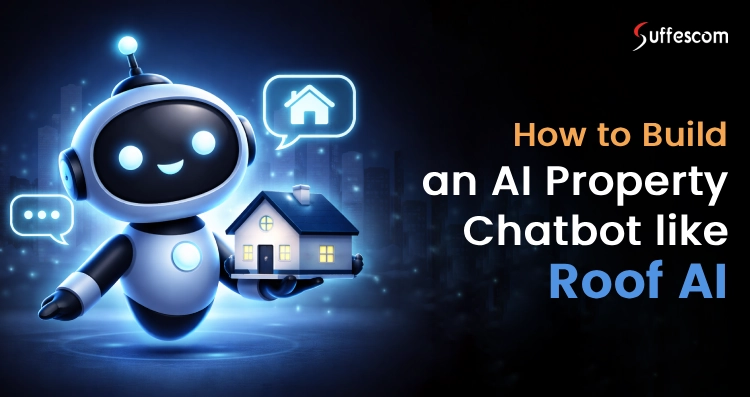
This guide provides a practical roadmap for building an AI property chatbot similar to Roof AI. We'll cover the essential features, technical architecture, development process, cost breakdown, and success metrics you need to create a high-performing conversational AI platform for real estate.
What is Roof AI? Understanding the Model
Core Functionality
Roof AI is a conversational AI assistant that is specifically designed for real estate companies. The software engages website visitors in natural language conversations, responds to property inquiries, identifies qualified buying leads, and delivers high-quality leads to the sales teams. Unlike other chatbots that are limited by decision trees, Roof AI utilizes natural language processing to have fluid conversations.
The system functions as an always-on sales assistant that captures leads outside business hours, handles multiple conversations simultaneously, and integrates directly with existing CRM and MLS systems. This automation allows real estate teams to focus on high-value activities like closing deals while the AI handles initial engagement and qualification.
Key Differentiators
The competitive edge of Roof AI is its ability to search using natural language. Users can search by entering queries in a conversational manner, such as “3-bedroom home near good schools with a backyard priced under $500K,” as opposed to using the typical search form.
The system also retains context-based conversations, which enables a prospect to change topics seamlessly. A prospect may inquire about the price, then move to information about the neighborhood, and finally come back to arranging a viewing without having to start the conversation all over again.
Intelligent lead routing represents another key feature. The system analyses conversation signals to identify serious buyers versus casual browsers, then automatically directs qualified prospects to the most appropriate agent based on specialization, availability, and geographic focus.
Business Impact
Market validation for AI property chatbots is significant. The global generative AI development market in real estate was $437.65 million in 2024 and is expected to reach $1.3 billion by 2034, growing at a compound annual growth rate of 11.52%. This is a result of increasing demand for automation that can enhance lead engagement and conversion efficiency.
Performance data confirms the technology's effectiveness. AI-powered scheduling increases appointments by 33.5%, while platforms report achieving a 9% lead-to-appointment conversion rate. The speed advantage is critical: leads engaging within 5 minutes convert up to 6 times more frequently than those contacted later, making instant AI response a competitive necessity.
Core Features You Need to Build an AI Property Chatbot
Must-Have Features
- Instant lead engagement forms the foundation of any effective property chatbot. The system must initiate conversations immediately when visitors land on your website or property listings, responding to inquiries in real-time regardless of time zone or business hours. This immediate interaction prevents lead drop-off that occurs when prospects wait for human responses.
- The ability to search for properties using adaptive AI technology enables users to search for property listings using natural language as opposed to strict filters. The AI has to interpret different phrases, read between the lines to understand what is implicitly needed, and then translate the questions asked in a conversation into search parameters.
- Lead qualification automation captures essential information through natural conversation flow. The chatbot should gather budget range, location preferences, timeline, property requirements, and contact details while maintaining engagement. Structured qualification ensures sales teams receive complete, actionable lead data.
- CRM and MLS integration enable the chatbot to access real-time property information and sync lead data directly into existing workflows. This integration eliminates manual data entry, ensures response accuracy, and creates a seamless transition from AI engagement to human follow-up.
- Smart appointment scheduling allows qualified prospects to book property viewings or agent consultations directly through the conversation. Integration with calendar systems prevents double-booking and reduces friction in the conversion process.
- Personalized recommendations deliver property suggestions based on stated preferences and conversation signals. The AI should refine recommendations dynamically as it learns more about user needs, creating a curated experience that feels tailored rather than generic.
Advanced Features Worth Considering
- Multi-channel support extends the chatbot beyond your website to platforms where prospects already spend time. WhatsApp, Facebook Messenger, SMS, and mobile app integrations expand reach and meet users on their preferred communication channels.
- Predictive lead scoring analyzes conversation patterns, question types, and engagement signals to identify high-intent prospects. This scoring helps prioritize agent outreach and optimize resource allocation toward the most promising opportunities.
- Behavioral analytics track conversation paths, common questions, drop-off points, and conversion triggers. These insights inform conversation optimization, content strategy, and user experience improvements over time.
- Conversation memory across sessions allows returning visitors to continue previous conversations without repetition. The system recognizes users, recalls their preferences, and picks up where earlier interactions ended, creating continuity that builds trust.
Technology Stack to Build a Chatbot like Roof AI
AI and NLP capabilities typically leverage existing language models rather than building from scratch. OpenAI's GPT-4 or Anthropic's Claude provide powerful conversational abilities through API access. Platforms like Dialogflow or Rasa offer conversation management frameworks with built-in intent recognition and dialogue handling.
Python serves as the primary language for machine learning workflows, data processing, and AI model integration. Libraries like spaCy and NLTK support additional NLP tasks such as entity extraction and text preprocessing.
Backend development often uses Node.js for its asynchronous capabilities and extensive ecosystem, or Python frameworks like Django or Flask for their ML integration advantages. PostgreSQL provides reliable relational data storage for structured property information, while MongoDB offers flexibility for semi-structured conversation data. Redis handles caching and session management to improve response times.
Integration architecture relies on REST or GraphQL APIs for communication between systems. Webhooks enable real-time data synchronization, triggering chatbot actions when CRM records update or new properties are listed.
Infrastructure deployment typically occurs on cloud platforms like AWS or Google Cloud Platform. Docker containers ensure consistent deployment across environments, while Kubernetes orchestrates scaling and load balancing. Content delivery networks accelerate asset loading for a better user experience.
Transform Your Real Estate Lead Generation with AI
Development Process for AI Property Chatbot like Roof AI: 6 Key Phases
Phase 1: Planning (2-3 weeks)
Strategic planning establishes the foundation for successful development. Define specific use cases your chatbot will handle—buyer engagement, seller inquiries, or rental questions. Map core conversation flows identifying typical user questions, required information, and desired actions. Audit your current technology stack to identify integration requirements with CRM systems, MLS databases, and calendar platforms.
Set measurable success metrics including lead capture rate, qualification accuracy, conversion to appointments, and response time. Clear metrics enable data-driven optimization after launch and demonstrate business value.
Phase 2: Design (2-3 weeks)
Conversation flow design translates business logic into structured dialogue paths. Create flowcharts showing the progression from initial greeting through information gathering to final action or handoff. Design fallback paths for unexpected inputs and escalation triggers for complex questions. Develop UI/UX for chat interfaces, prioritizing clarity and mobile responsiveness. Design message bubbles, quick reply buttons, and typing indicators.
Create admin dashboard wireframes showing conversation monitoring, lead management, and performance metrics. Define brand voice by documenting tone, formality level, and example phrases that capture your company personality.
Phase 3: Data Preparation (2 weeks)
Structure property data by standardizing formats across different sources. Create a unified schema including address, price, bedrooms, bathrooms, square footage, and availability status. Clean existing data, removing duplicates and fixing inconsistencies. Collect examples of user questions and appropriate responses to train intent recognition models. Including variations of common queries about neighborhoods, pricing, and availability.
Build a FAQ knowledge base covering the buying process, financing, and your services. Document MLS and CRM API endpoints, authentication requirements, and data formats for integration development.
Phase 4: Development (8-10 weeks)
Build the AI conversation engine configuring intent classification to recognize user goals like property search, scheduling viewings, and pricing questions. Develop entity extraction identifying locations, price ranges, and property features within messages. Create response generation logic, selecting appropriate replies based on intent and context. Develop CRM and MLS integrations using APIs with robust error handling.
Build frontend interfaces for website widgets, mobile apps, and messaging platforms. Create the admin dashboard for conversation monitoring, lead management, and system configuration. Implement all components to work seamlessly together.
Phase 5: Testing (3 weeks)
Validate conversation flows across different scenarios, testing happy paths, edge cases, and error conditions. Verify context is maintained correctly across multi-turn conversations. Confirm integrations flow data accurately between systems—send test leads to CRM, query property data, and schedule test appointments. Conduct load testing simulating multiple concurrent conversations to identify bottlenecks and verify infrastructure scales appropriately.
Perform user acceptance testing with real users, observing how they phrase questions and where confusion occurs. Gather feedback on conversation quality, interface usability, and overall experience before full launch.
Phase 6: Launch & Optimize (Ongoing)
Deploy the chatbot to a limited audience initially, monitoring conversations closely for issues and gathering early feedback. This controlled rollout reduces risk while validating system performance. Analyze real conversation data to identify confusion points, unanswered questions, and requested features. Retrain intent classifiers with actual user queries, improving accuracy. Update response templates addressing knowledge gaps.
Monitor performance metrics weekly, analyze conversation failures monthly, and implement enhancements quarterly. Track how changes impact key metrics, validating improvements. Continuous optimization based on real usage data ensures the chatbot evolves to meet user needs effectively.
Ensuring Accuracy & Trust
Establish clear boundaries of intent to ensure the chatbot understands its limitations. If users pose questions beyond the knowledge base of the system in place, it should indicate its uncertainty and provide escalation to human support instead of making an educated guess. Use the fallback feature to escalate conversations to human support when they become complicated or when users indicate frustration. Set triggers that detect when AI support is not enough.
Regular model retraining maintains accuracy as language patterns evolve and new property types emerge. Schedule monthly reviews of conversation data to identify classification errors and knowledge gaps.
Success Metrics to Track
Engagement Metrics
Conversation initiation rate measures what percentage of website visitors engage with the chatbot. Low rates suggest visibility issues or poor value proposition in the opening message. Target 15-25% initiation for website widgets.
Average conversation length is an indicator of the level of engagement. A conversation that is too short may indicate confusion or poor response quality, while a conversation that is too long may be inefficient. The optimal length of a conversation depends on the application and usually ranges between 8-15 exchanges.
Completion rate tracks how many conversations reach a defined goal, like capturing contact information, scheduling an appointment, or providing a property recommendation. Target 60-70% completion rates for well-designed flows.
Business Metrics
Lead capture rate measures the percentage of conversations that result in collecting user contact information. This directly impacts sales pipeline growth. Effective chatbots achieve 40-60% capture rates.
Qualified lead conversion tracks what percentage of captured leads meet your qualification criteria for sales follow-up. Higher qualification rates reduce wasted agent time. Target 50-70% of captures as qualified leads.
Cost per qualified lead compares total chatbot investment against qualified leads generated. Calculate by dividing monthly costs (development amortization plus operating expenses) by qualified leads that month. Track this metric to demonstrate ROI.
AI Performance
Intent recognition accuracy measures how often the system correctly identifies what users want. Review conversation samples and classify intent identification as correct or incorrect. Target above 90% accuracy for production systems.
Response time tracks latency from user message to chatbot reply. Slow responses damage experience and increase abandonment. Target under 2 seconds for most responses, with clear typing indicators for longer processing.
Escalation rate indicates how frequently conversations transfer to human agents. High escalation suggests the chatbot lacks the necessary knowledge or capabilities. Monitor this metric to identify knowledge gaps requiring content additions.
Why Choose AI Development Service for AI Chatbot Development?
Proven Expertise in AI Chatbot Development
AI Development Service brings specialized experience building conversational AI platforms across the real estate, e-commerce, healthcare, and customer service industries. Our team understands the unique challenges of property chatbots, including data inconsistency, complex intent recognition, and real-time integration requirements.
We provide end-to-end development from initial concept through deployment and ongoing optimization. This comprehensive approach ensures all components work together seamlessly rather than treating the chatbot as an isolated feature.
Our AI technology mastery spans leading platforms, including OpenAI GPT-4, Anthropic Claude, and custom machine learning models. We select the right technology for your specific requirements rather than forcing every project into the same template.
Ready to transform your real estate lead generation? Contact AI Development Service today to schedule a free consultation with our AI experts and discover how a custom property chatbot can accelerate your business growth.
Ready to Build Your AI Property Chatbot?
Conclusion
Building an AI property chatbot like Roof AI requires strategic planning, the right technology stack, and a deep understanding of both conversational AI and real estate workflows. The investment ranges from $65,000 to $135,000 for an MVP, with development timelines of 3-4 months before launch.
Success depends on focusing on conversation quality over feature quantity. A chatbot that handles core use cases exceptionally well outperforms one with numerous mediocre capabilities. Start with essential features like lead engagement, property search, qualification, and CRM integration, then expand based on data about what users actually need.
AI property chatbots represent a proven technology with demonstrated ROI. The question isn't whether conversational AI can improve real estate lead generation, but how quickly you'll implement it before competitors gain the advantage.
FAQ
Q1: How long does it take to build an AI property chatbot?
The development process would take 3-4 months for a minimum viable product with basic features such as lead engagement, property search, qualification, and CRM integration. More complex platforms with sophisticated features, integrations, and customized AI models would take 6-8 months.
Q2: Can it integrate with my existing CRM?
Yes, today’s AI chatbots can be easily integrated with most of the popular CRM solutions like Salesforce, HubSpot, Zoho, and more. This is done using standard APIs. This enables the automatic creation of leads, mapping of fields, and logging of activities without the need to manually enter data. This is also possible in custom or legacy CRMs with the right API access.
Q3: Do I need my own AI models?
No, you don't need to build custom AI models from scratch. Using existing language model APIs like OpenAI GPT-4 or Anthropic Claude delivers sophisticated conversational capabilities at a reasonable cost. These services handle natural language understanding and generation while you focus on conversation design, integrations, and business logic. Custom models only make sense for highly specialized requirements.
Q4: How accurate are AI chatbots?
Well-trained AI property chatbots have an accuracy rate of above 90% in intent recognition, which means that they are able to correctly identify the users’ intent more than 9 out of 10 times. The accuracy rate can start at 80-85% and improve over time as the chatbot learns from conversations.
Q5: What's the ROI timeline?
Most businesses see positive ROI within 6-12 months through increased lead conversion and reduced operational costs. Fast-growing real estate businesses with high lead volumes may achieve ROI in 3-6 months. Calculate ROI by comparing chatbot costs against the value of additional qualified leads generated and agent time saved on initial inquiries.
Q6: What happens when the chatbot doesn't know an answer?
Well-designed chatbots understand their limitations and handle them smoothly. When they come across questions that are not in their knowledge base or sense the frustration of the user, they should inform the user of the limitation and provide an option to connect with a human customer service representative.
Q7: Can the chatbot handle multiple languages?
Yes, AI chatbots can support multiple languages, though implementation approaches vary. Some language models handle multiple languages natively, while others require separate configurations per language. Consider your market's language needs during planning and budget accordingly, as multilingual support increases development and testing complexity.
Related Posts:
1. Top 10 AI Agent Chatbot Development Companies Kuwait
2. Top 10 AI Therapy Chatbot Development Companies
3. Top 7 AI Agent Chatbot Development Companies Oman
4. Top 10 AI Adult Companion Chatbot Development Companies 2026